Rising Fuel Costs Signal Higher Airfares
As the peak summer travel season approaches, airfares in Spain are expected to rise. Javier Gándara, president of the Spanish Airlines Association (ALA), recently warned that geopolitical tensions in the Middle East are driving up aviation fuel prices. This cost is likely to be passed on to consumers, leading to higher ticket prices. He advised travelers with upcoming plans to book their flights early to secure lower fares.
Low-cost giant Ryanair echoed this sentiment. CEO Eddie Wilson predicted that fares will climb further with the arrival of the high season from July to September, especially for those who book last minute.
Ryanair Cuts Capacity, Blames Airport Fees
Beyond the fuel issue, a reduction in available seats presents another challenge for travelers. Ryanair has confirmed it will cut approximately 1.2 million planned seats in the Spanish market for the upcoming operating season (April to October). The airline explicitly attributes this move to the airport fee increase announced and implemented by Spain’s airport operator, Aena, last fall.
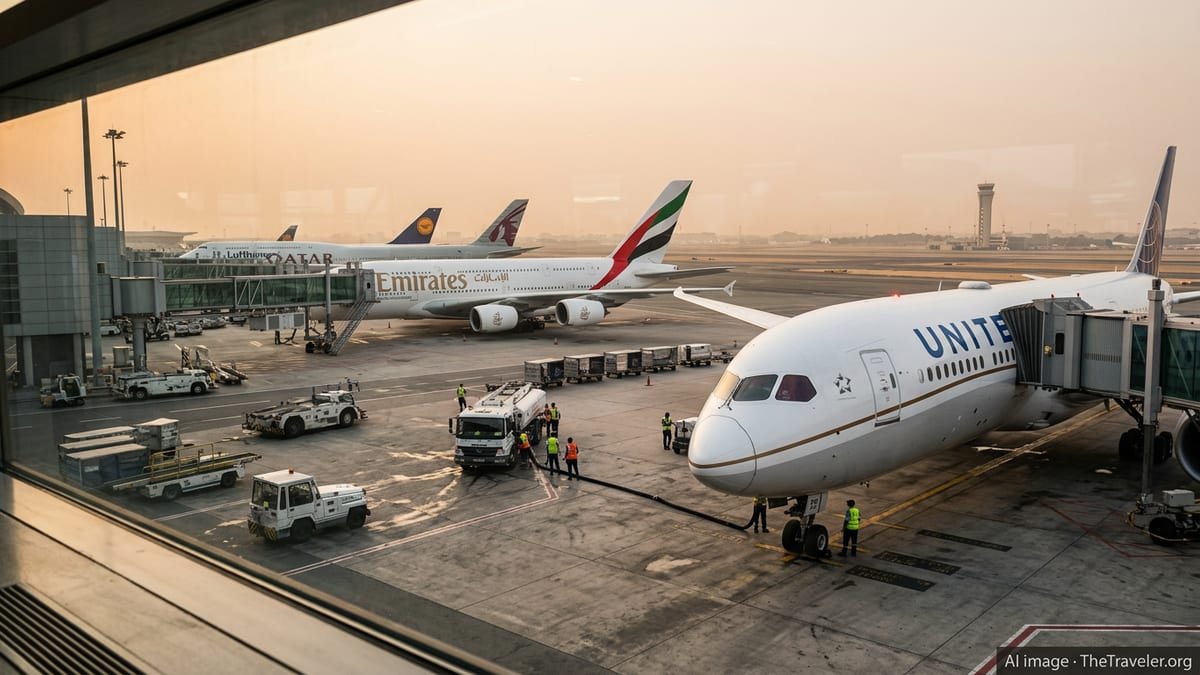
Although Ryanair has ruled out the possibility of mass flight cancellations in the near future and will maintain its established operational framework, the capacity cut is a done deal. However, the company revealed that through its price hedging strategy, it has locked in prices for about 80% of its fuel needs for the next 12 months. This means only 20% of its fuel costs will be affected by real-time market fluctuations in the short term.
Airport Saturation and Airline Strategies
Airport infrastructure capacity has become another bottleneck limiting the number of flights. Ryanair pointed out that despite increased capacity at popular tourist destinations like Málaga and Alicante, passenger traffic is nearing saturation. Similarly, the main airports in Madrid and Barcelona are also facing significant capacity pressure.
Eddie Wilson warned that if airport congestion does not improve during the summer, the company might consider further cutting its seat capacity in Spain before the end of the tourist season. He also mentioned disparities in fuel supply among different countries; for example, the UK is more reliant on imports due to refinery closures, whereas Spain’s supply situation is relatively better for now. However, he cautioned that no absolute guarantees can be made in the current complex climate.
The Tussle Between Airlines and the Airport Authority
The conflict between Ryanair and Aena is becoming increasingly public. Ryanair has fiercely criticized Aena for increasing airport charges while distributing high dividends to its shareholders (with the Spanish government being the majority shareholder). The airline argues that this move prioritizes short-term shareholder interests at the expense of routes, tourists, and jobs.
Ryanair is pressuring Aena, stating that if the operator continues with its high-fee policy, the airline will further reduce flights at Spain’s regional airports. The airline points out that some of Spain’s regional airports remain underutilized, with valuable resources failing to translate into growth for local tourism and economies, resulting in a continuous loss of development opportunities.
