Spain’s Horizontal Property Act: The Common Nature of Building Facades
Many homeowners mistakenly believe they can freely drill into or install equipment on the exterior walls adjacent to their homes, but Spanish law is very clear on this. According to the Horizontal Property Act (Ley de Propiedad Horizontal), the facades, roofs, and other structural elements of condominium buildings are the common property of all owners. Therefore, no individual owner has the unilateral right to alter their appearance, which includes installing outdoor air conditioning units.
Three Legal Red Lines for Installing Outdoor AC Units
Legally, any modification to common elements must not violate these three fundamental principles:
- Do Not Alter the Building’s Overall Appearance: Mounting an outdoor AC unit on a street-facing wall or any facade visible from public areas is generally considered an act that disrupts the building’s aesthetic unity.
- Do Not Compromise Structural Safety: The installation process must not pose any potential risk to the walls, load-bearing structures, or other structural components.
- Do Not Disturb Others: The noise, vibrations, or hot air expelled by the outdoor unit can also constitute a violation if they disturb neighbors.
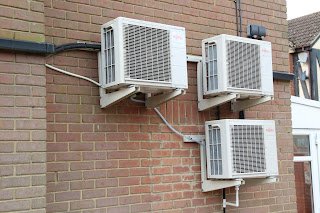
The Only Path to Compliance: Approval from the Homeowners’ Association
If you need to install an outdoor AC unit on an exterior wall, you must follow the proper legal procedure. First, submit a detailed installation plan to your homeowners’ association (Comunidad de Propietarios). This plan should specify the proposed location, equipment specifications, and any potential impact on the building’s appearance and your neighbors. The proposal must then be discussed and voted on at a homeowners’ meeting (Junta de Propietarios). The installation is only legal after receiving approval from the required majority of owners.
Serious Consequences of Illegal Installation
If an owner ignores these rules and installs an outdoor unit without permission, any affected neighbor or the homeowners’ association has the right to object and take legal action. In practice, courts typically side with the homeowners’ association, ordering the non-compliant owner to remove the AC unit by a certain deadline and bear all associated costs. These costs can include removal fees, wall repair expenses, and potential legal fees. This ‘act first, ask later’ approach often leads to financial loss and damaged neighborly relations.
