From Disappearance to Discovery: A 41-Day Search
The high-profile disappearance case of Alicante businessman Jesús Tavira has seen a major breakthrough. After his family reported him missing on March 18, the case went cold for 41 days. The investigation took a turn when police located Tavira’s Audi Q5, which had been completely torched. This clue led Spain’s National Police to escalate the case and zero in on a new line of inquiry.
A Grisly Scene: Evidence Beneath the Concrete
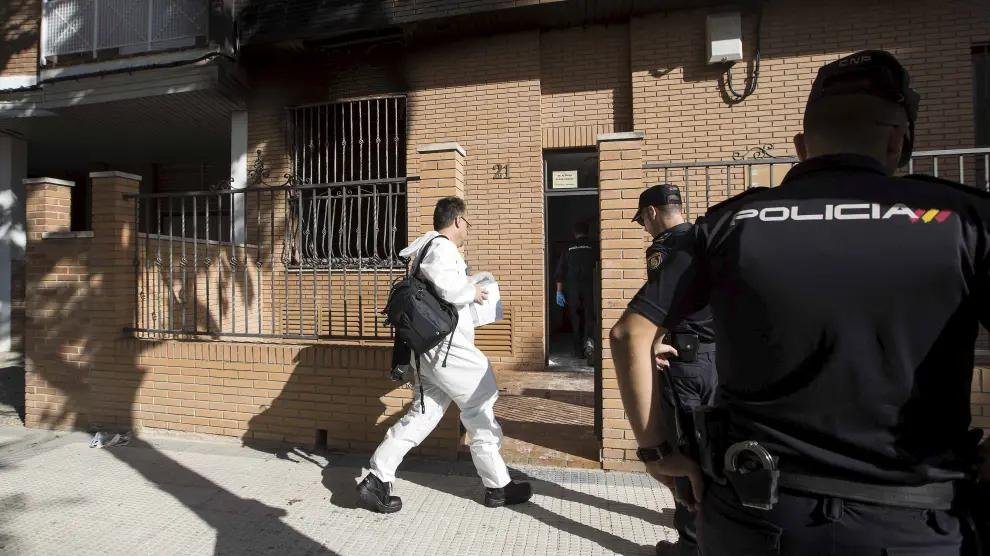
Following a lead, police initiated an operation at a residence in Alicante’s El Bacarot district this Tuesday. In a search that lasted over ten hours and required heavy machinery, investigators made a startling discovery inside an underground structure, possibly a disused septic tank. The victim’s body, tightly wrapped in plastic, was buried under approximately two meters of concrete. The preliminary forensic examination indicated the body was in an advanced state of decomposition with multiple fatal stab wounds, confirming it was a homicide. A necklace and the clothing on the body were crucial in helping to identify the victim as Tavira.
Suspects Emerge: The Former Employee’s Lie
With the discovery of the body, police swiftly arrested four suspects aged 35 to 45. A key person of interest is a mechanic who formerly worked at Tavira’s car scrapyard. This individual had rented the property where the body was discovered just two months prior to the incident. During initial questioning, he claimed he saw Tavira leave with two other people on the day he went missing. This account was quickly debunked by police as a lie, making him a primary suspect. He was subsequently placed under surveillance, leading to his arrest. Others taken into custody include the property owners, a couple of Maghrebi descent, and another man with a criminal record. A fourth suspect, allegedly involved in burning the victim’s vehicle, was arrested on Wednesday.
Motive Remains a Mystery: A Link to a Past Case or Something More?
To date, none of the four suspects have confessed, and their exact motive remains the core of the police investigation. The primary theory is that the murder may have been triggered by a work-related or financial dispute. Investigators are meticulously examining Tavira’s business activities and his complex web of personal and professional relationships. It is worth noting that Tavira was a key witness in another high-profile Alicante case from 2016, the murder of Mari Carmen, for which his son-in-law was tried and acquitted on grounds of insufficient evidence. Despite this connection, police state there is no current evidence to suggest a direct link between the two cases, which occurred years apart. The full story behind the crime has yet to be uncovered as the investigation unfolds.
