Euribor’s Continued Rise Significantly Increases Mortgage Burden
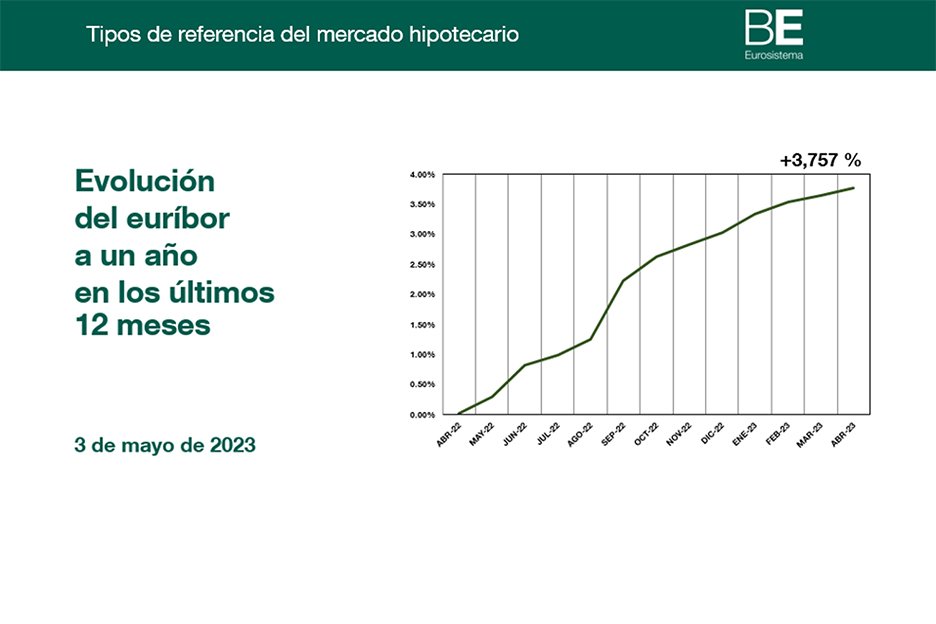
With April’s data about to be finalized, the monthly average for the Euro Interbank Offered Rate (Euribor), the benchmark for the vast majority of variable-rate mortgages in Spain, is expected to climb to approximately 2.739%. This marks the second consecutive month of increase for this key indicator, directly putting millions of Spanish households under a new round of pressure from rising mortgage costs in the short term.
For the average family, this rate change translates into a tangible increase in financial expenses. Market calculations suggest that for a typical mortgage of €150,000, monthly repayments could increase by approximately €40 to €50 after the rate adjustment. For larger loans, such as €300,000, the additional monthly burden could exceed €90. Over time, this will significantly erode a family’s annual disposable income and savings capacity.
Geopolitical Tensions and Inflationary Expectations are Key Drivers
Behind this latest Euribor surge is a combination of complex macroeconomic factors. Firstly, ongoing conflicts in the Middle East have created high uncertainty in the energy market, pushing up inflation expectations and thereby fueling market speculation that the European Central Bank (ECB) might raise interest rates again in the future.
Secondly, the market is concerned about potential risks to key shipping routes, such as the Strait of Hormuz. Any disruption to shipping could quickly translate into higher prices for fuel, transportation, and basic commodities, further intensifying overall inflationary pressures in the Eurozone. These factors collectively create the external environment for rising interest rates.
The ECB’s Policy Dilemma and Future Outlook
Faced with the current economic situation, the European Central Bank’s monetary policy is at a delicate balancing point. ECB President Christine Lagarde recently stated that more economic data is needed to clarify the future policy direction, indicating a cautious stance from policymakers. However, the market widely anticipates that the possibility of further interest rate hikes in the second half of the year cannot be ruled out.
European monetary policymakers face the dual challenge of effectively controlling inflation without excessively stifling economic growth. Against this macroeconomic backdrop, mortgage holders in Spain and across the Eurozone are the group most directly bearing the pressure of interest rate fluctuations, facing greater uncertainty in their future financial planning.
