Procurement Deadlock: Largest Order in History Faces Delays
At the end of 2023, the Spanish government launched what was hailed as its ‘largest-ever’ train procurement plan to modernize the national railway network. However, to date, not a single new train has entered service due to manufacturers’ failure to meet contractual deadlines. Óscar Puente, Spain’s Minister for Transport and Sustainable Mobility, pointed out that the delivery of fleets intended to upgrade the Cercanías commuter rail systems in Madrid and Catalonia has been delayed by at least two years. In response to this situation, the Spanish government has imposed a hefty fine of €116 million on local manufacturer Talgo for its delivery delays.
Public Criticism at EU Meeting
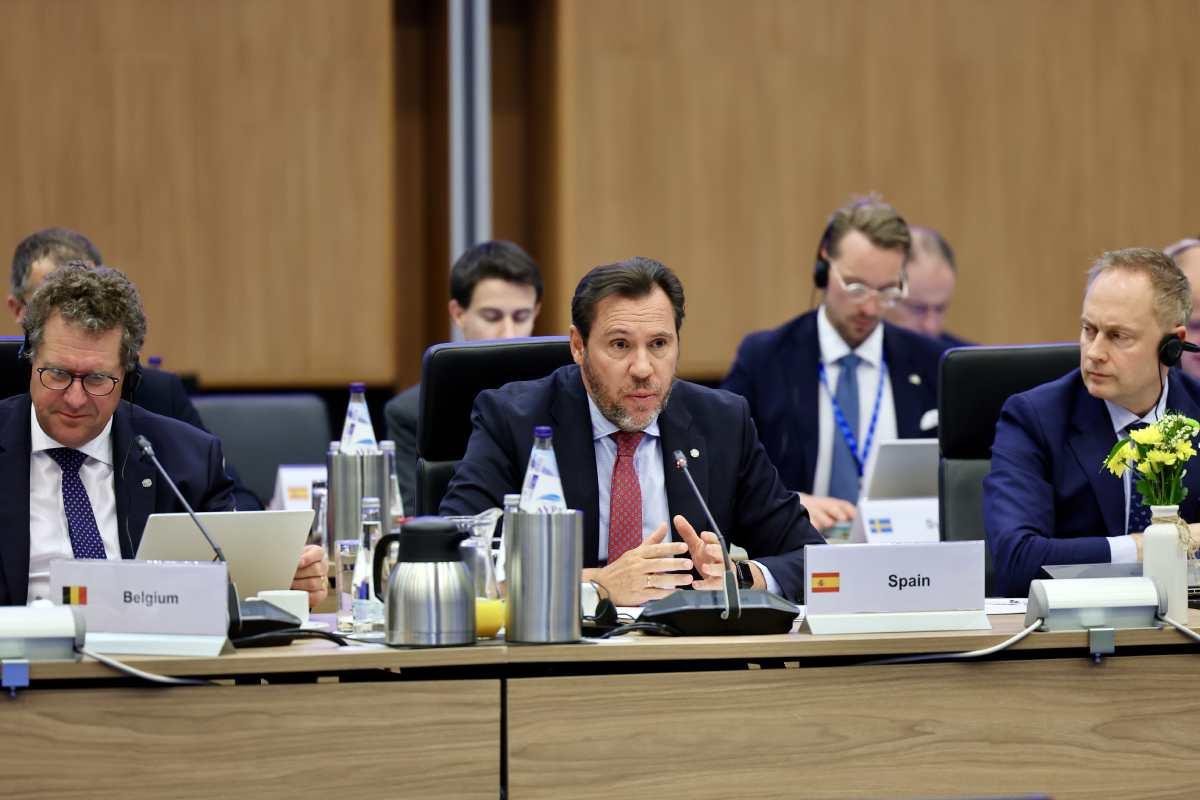
During this week’s informal meeting of EU transport ministers in Cyprus, Minister Puente brought the issue to the European stage. He specifically criticized European railway manufacturing giants like Alstom and Stadler, accusing their widespread contract breaches of severely hindering transport development and economic integration in Spain and across Europe. ‘We cannot accept that it takes six to seven years to manufacture and deliver a train,’ he warned, noting that a key reason for the current crisis is that European manufacturers accept orders blindly despite operating at full capacity, yet are unwilling to invest in new factories.
The “Chinese Solution”: Minister Praises Efficiency and Low Cost
In stark contrast to the delays from European firms is the efficiency of Chinese manufacturers. Minister Puente shared insights from his visit to China last December, highly praising the production capacity of China’s CRRC. He mentioned that Chinese manufacturers promise to deliver trains within 60 days at just half the price of their European counterparts. In comparison, European manufacturers often have a delivery cycle of up to 5 years (60 months). Puente bluntly stated, ‘I am a politician, but I am also a buyer, and I cannot wait 60 months.’ This statement underscores his pragmatic approach in the face of practical needs.
Call for Reform: Adopting the “Airbus Model” and Streamlining Certification
Facing a competitiveness crisis in Europe’s railway industry, Puente proposed concrete reforms. He argued that European industry must learn from the success of Airbus, enhancing overall production capacity and efficiency through deep integration, or it will fail to meet current expansion challenges. Additionally, he directly urged the French Minister of Transport to accelerate the certification process for Spanish trains. Previously, Spain’s national railway, Renfe, was forced to abandon plans to launch an AVE high-speed line from Madrid to Paris due to France’s cumbersome certification procedures and various restrictions. Puente’s stance was echoed by the European Union Agency for Railways (ERA), which also called for member states to jointly pressure defaulting manufacturers and to simplify bureaucratic certification processes to promote the integration of the European rail market.
