Quantifying the Strike’s Impact: Service Delays and Economic Losses
According to a report by El Mundo, the nationwide protests and strikes by doctors in Spain since January 2026 have significantly impacted the healthcare system. To date, a cumulative 22 days of nationwide strikes have resulted in the cancellation or rescheduling of over 2.7 million medical activities, including consultations, diagnostic tests, and surgeries.
The direct economic losses from the strike have already surpassed €200 million. This figure is incomplete, as only some autonomous communities have released detailed financial impacts. Among them, Andalusia reported losses of approximately €130 million, the Community of Madrid €12.8 million, La Rioja €10 million, and Aragon €3 million. Regarding patient waiting times, the Basque Country and La Rioja have revealed that the average waiting time for surgery has been extended by about 20 days as a result.
Core of the Conflict: ‘Framework Statute’ Reform and Negotiation Deadlock
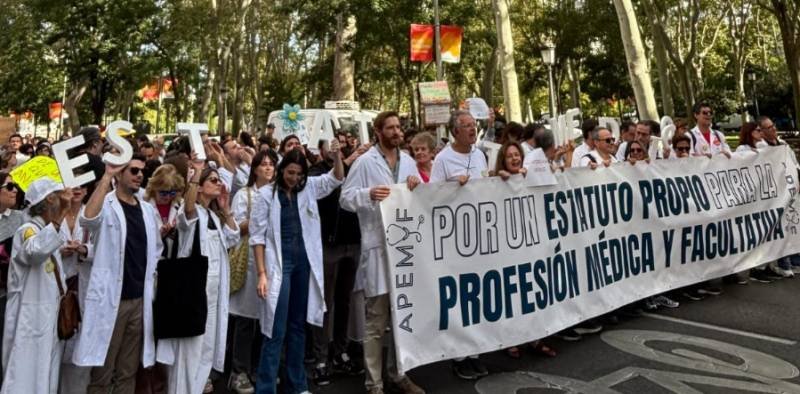
The root of this labor dispute traces back to June 2025, when the government released the first draft of the ‘Framework Statute’ (Estatuto Marco) reform. The medical community felt the reform failed to address long-standing issues such as extreme working hours, and protests have escalated since January 2026. Doctors point out that under current regulations, they can be required to work up to 192 hours per month and take on more than 8 on-call shifts, stating the strike is a fight for more reasonable working conditions.
Despite more than 25 meetings between the Spanish Ministry of Health and the strike committee, negotiations have not reached a breakthrough. Minister of Health Mónica García claimed that three “almost finalized” agreements had been reached, but this was not confirmed by the doctors’ unions. The unions insist that their core demands have not been met.
Political Maneuvering and Doctors’ Plight
While the strike continues, Minister of Health Mónica García has announced her candidacy in the Más Madrid party primaries to run for President of the Community of Madrid. She recently criticized the stance of some medical organizations, describing it as “highly aligned with right-wing positions,” and accused the strike committee of “disloyalty” for not adequately communicating the negotiation status to the doctors.
On the other hand, striking doctors are under immense pressure. Ángela Hernández, secretary of Amyts, Madrid’s main doctors’ union, estimates that each striking doctor loses about €250 per day in income. Víctor Pedrera, secretary-general of the Spanish Confederation of Medical Unions (CESM), stated that despite the financial losses and the Ministry’s firm stance, doctor participation in the strike remains high, showing their strong resolve.
A Grim Warning for the Future
As the strike continues, its long-term effects are causing deep concern within the industry. An anesthesiologist at a hospital pointed out that every canceled surgery directly affects patients and inflicts a threefold loss on doctors and the healthcare system—a cost that is not being fully appreciated.
César Pascual, the Minister of Health for the autonomous community of Cantabria, issued a more severe warning. He stated that if the strike lasts for five weeks, its impact on the healthcare system will be “comparable to the COVID-19 pandemic,” potentially setting back Spain’s medical services by three to four years across the board. This statement highlights the gravity of the current situation and the urgent need to resolve the conflict.
