The city of Alicante in Spain is embarking on the most ambitious transformation project in its history. The core of the plan is to convert a 240,000-square-meter area in front of the downtown train station—currently a grey space of parking lots and temporary structures—into a large urban green space: the Alicante Central Park (Parque Central de Alicante).
A 240,000 sqm Green Lung: Mending the Urban Fabric
According to the plan, the new central park will completely reshape the city’s landscape, aiming to repair the urban division caused by the railway tracks. The park will start at Plaza de la Estrella, extend 2.1 kilometers south along the railway line to the Vía Parque area, and reconnect the neighborhoods on both sides, creating an “urban green lung” that runs through the city.
Gateway Renovation and Transport Hub Upgrade
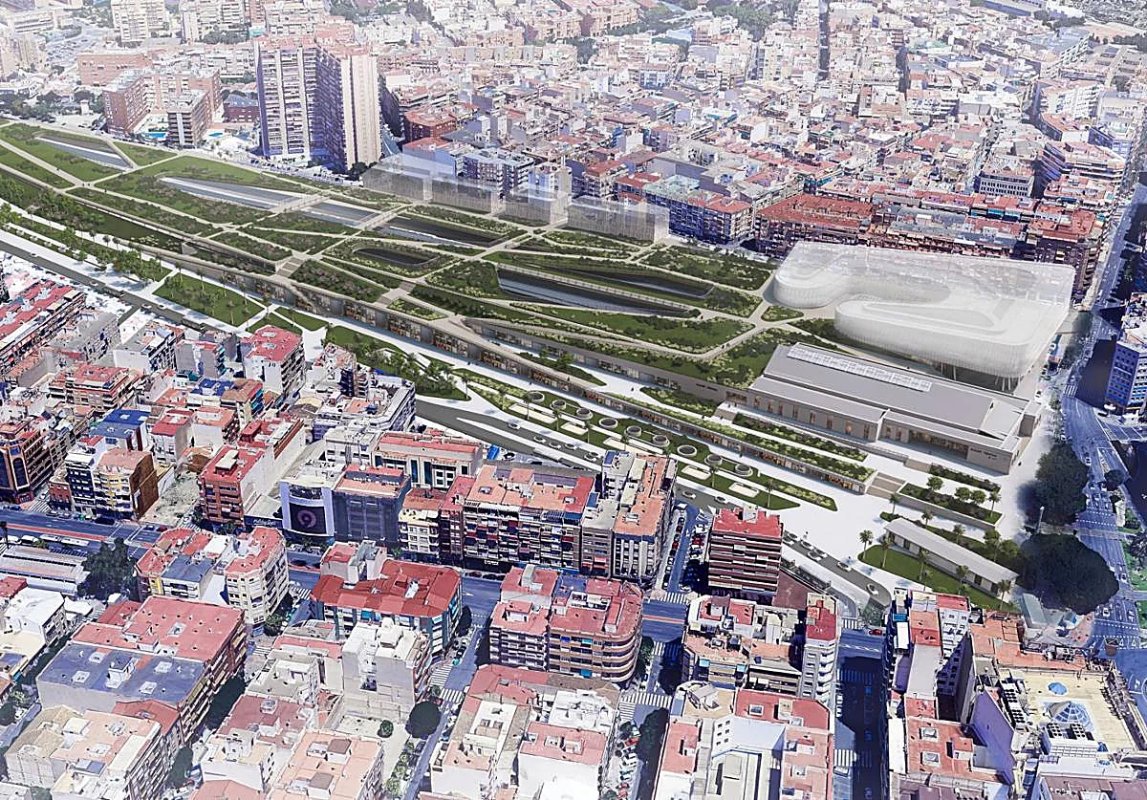
The first phase of the renovation will focus on Plaza de la Estrella. The existing parking lots, toll booths, and various fences will be completely removed, and the road surface will be leveled with the sidewalks to create an open pedestrian entrance plaza. A landmark centuries-old fig tree in the square will be preserved and serve as a focal point for the new landscape. The long-term goal is for the future central station to seamlessly integrate Alicante’s TRAM (light rail), the long-distance bus station, and all rail networks—including Cercanías (commuter rail), medium and long-distance trains, and the AVE (high-speed rail). This will establish a modern, multimodal transport hub, allowing passengers to transfer conveniently in a green environment.
A Nod to History: Restoring the 19th-Century Station’s Facade
Beyond the future-oriented park and transport hub, a major highlight of the project is the historic restoration of the train station building itself. In the planned second phase, the reflective glass and granite panels from the 1960s that currently cover the station’s exterior will be removed. This move aims to restore the building’s original neoclassical facade from 1858, bringing its iconic Doric colonnade and classical staircase back into public view, allowing travelers to experience the city’s historical character upon arrival in Alicante.
