“Triple Eclipse” Sparks Astro-Tourism Boom
Over the next three years, Spain is set to witness three consecutive solar eclipses. This series of events, dubbed the ‘Iberian Triple Eclipse,’ is fueling an unprecedented rural tourism boom. According to a study by the international financial analysis firm Analistas Financieros Internacionales (AFI), these astronomical phenomena are projected to attract over one million visitors to Spain’s rural areas, generating more than €1.3 billion in revenue through tourist apartments and short-term rentals. In most autonomous communities, international tourists are expected to account for over 80% of spending, acting as the main driver of this tourism surge.
First Eclipse’s Economic Impact: Valencia to Be the Biggest Beneficiary
The first eclipse will occur on August 12, 2026. This single event is expected to generate approximately €360 million in tourist spending within just one week. The retail and food service sectors will be the primary beneficiaries, projected to capture around €123 million in expenditure, while the leisure and entertainment industry is expected to see revenues of €90 million.
In terms of regional distribution, the Valencian Community is projected to receive the largest economic boost, with an impact exceeding €130 million. Other major beneficiary regions include the Community of Madrid (€54 million), Castile and León (€37 million), Aragon (€25 million), Galicia (€24 million), and the Basque Country (€21 million).
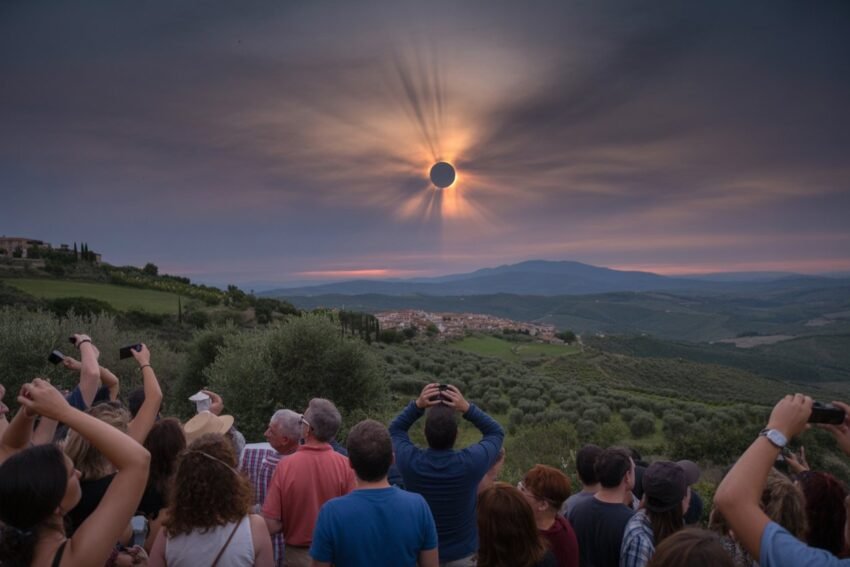
Overall Economic Boost: Growth in Employment and Tax Revenue
The impact of the eclipses extends far beyond direct tourism spending. The study forecasts that the 2026 eclipse alone will add €421 million in value to the overall Spanish economy and create nearly 7,300 jobs. Public finances will also benefit, with an estimated €146 million in tax revenue generated. These figures demonstrate that astro-tourism, through its multiplier effect, can effectively stimulate local economies and contribute to national economic growth.
Structural Opportunities and Accommodation Challenges
For a long time, Spain’s rural areas have seen significantly lower tourist numbers and spending levels compared to its cities. These three eclipses are seen as a unique opportunity to address this structural imbalance. The eclipse scheduled for January 2028, in particular, is expected to significantly alleviate the issue of tourism seasonality. A survey by market research firm Opinium reveals that 73% of respondents consider the eclipses an ideal reason to explore Spain’s countryside.
However, this immense demand also presents challenges. The AFI study points out that 47% of municipalities within the optimal viewing path for the eclipse still lack sufficient accommodation capacity. It is estimated that this could lead to approximately 47,500 tourists missing the event due to a lack of suitable lodging. While the short-term rental sector can effectively supplement traditional hotels, there is still significant pressure to meet the massive tourist demand.
