Significant Public Divide Along Political Lines
According to a public opinion poll published by the Spanish newspaper El País on May 5, 2024, Spanish society is markedly divided on the issue of immigrant amnesty. The survey, conducted by the polling agency 40dB, found that 38% of respondents view the amnesty positively, 33% are opposed, while another 22% hold a neutral or “so-so” opinion.
Political affiliation is a key factor influencing public attitude. Among voters of the right-wing People’s Party (PP) and the far-right VOX party, opposition to the amnesty reaches as high as 64% and 89%, respectively. In contrast, among supporters of the ruling coalition’s left-wing Socialist Party (PSOE) and SUMAR, the opposition rate drops to around 22%, highlighting a clear political divide.
Widespread Misconceptions About Amnesty Details
The survey revealed that the Spanish public has a rather vague understanding of the immigrant amnesty policy, with many misconceptions. A prominent example is that a staggering 40% of respondents mistakenly believe that regularization is equivalent to being granted Spanish citizenship directly. Furthermore, 30.9% think that all undocumented immigrants who apply will automatically receive residency, overlooking the strict set of conditions that must be met.
El País’s analysis suggests that these misunderstandings are partly due to the public narrative pushed by certain political forces, particularly from the right-wing camp. Many people even mistakenly believe the amnesty would apply indiscriminately to all immigrants, including convicted criminals.
A Mix of Concerns and Hopes: The Dual Impact of Amnesty
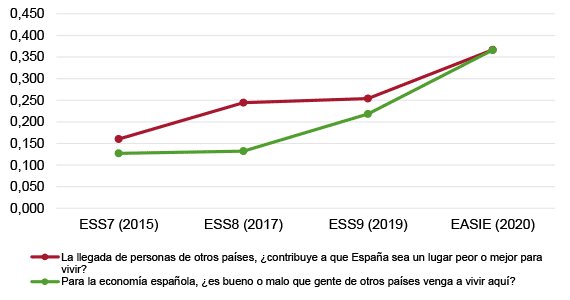
Public opinion is also divided regarding the potential consequences of the amnesty.
Most opponents, especially right-wing voters, expressed concerns about negative outcomes. They believe an amnesty could strain the housing market, place greater pressure on the public healthcare and education systems, and negatively impact social security, the job market, and the economy as a whole. Statistically, 64% of PP supporters and 89% of Vox supporters share these concerns.
However, a significant portion of the public also sees the positive potential of the amnesty. Approximately 50% of Spaniards acknowledge that it would help improve immigrants’ living conditions, fill labor shortages in sectors like agriculture, hospitality, and services, and boost the social security system’s revenue by converting under-the-table workers into legal taxpayers. It could also have a positive effect on the nation’s birth rate.
Economic Realities and Historical Context
Economically, Spain’s need for immigrant labor is increasingly urgent. A 2024 report by the Bank of Spain projected that to maintain a balance between the workforce and the retired population, Spain will need to add 24 million immigrants by 2053. Data from Spain’s National Statistics Institute (INE) also shows that the nation’s retiree population will grow from just over 9 million currently to 14.8 million by then.
Legalizing undocumented immigrants allows them to formally enter the tax and social security contribution system, contributing to state finances. One study suggests that without immigrant labor, about 90,000 restaurants and bars in Spain could face closure. Additionally, the transnational European research project TransEuroWorkS concluded that non-EU immigrants generally place a lower net burden on public finances than the native-born population.
Historically, while 60% of the public is aware that Spain has conducted amnesties in the past, many do not know that these were carried out by parties from both the left and right. Historically, the Socialist Party (PSOE) and the People’s Party (PP) have each implemented two amnesties, collectively granting legal status to over a million immigrants.
