International Coordination and Humanitarian Decision
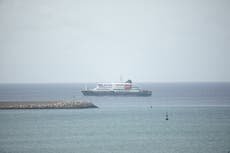
On May 5, 2026, after consultations with the European Union and the World Health Organization (WHO), the Spanish government agreed to authorize the Dutch-flagged cruise ship MV Hondius, experiencing a Hantavirus outbreak, to dock in its Canary Islands. Spanish officials stated the move fulfills international legal obligations and is based on humanitarian considerations, especially given the presence of 14 Spanish citizens on board. The WHO noted that nearby Cape Verde lacks the capacity to handle such a public health event, making the Canary Islands, with its adequate medical facilities, the most suitable location for reception.
Complex Medical Evacuation and Disembarkation Plan
According to a joint plan developed by multiple parties, the response to the outbreak on board will be conducted in phases. Among the 147 passengers and crew, there are currently 7 confirmed or suspected cases, including 3 fatalities. The plan stipulates that 3 patients will be evacuated directly from the ship via a medical aircraft equipped with high-level isolation units and transported to the Netherlands for treatment. Additionally, a critically ill patient (believed to be the ship’s doctor) hospitalized in South Africa will also be transferred to a hospital in the Canary Islands. The remaining passengers and crew will continue their voyage with the ship, expected to arrive in Tenerife within three to four days. Upon arrival, all individuals will undergo comprehensive medical examinations and assessments before being repatriated to their home countries.
Strict Health Protocols and Risk Assessment
To ensure public safety, the entire process will be carried out under extremely strict health protocols. The Spanish Ministry of Health has emphasized that all medical treatment and personnel transfers will follow a unified plan established by the WHO and the European Centre for Disease Prevention and Control (ECDC), conducted in specially designated isolation environments to prevent any contact with the local population. Spain’s Health Alerts and Emergencies Coordination Centre has assessed that the overall risk to the public is low, as Hantavirus is primarily transmitted through contact with infected rodents, and human-to-human transmission is extremely rare, occurring only under conditions of very close contact. Most people on board are currently asymptomatic.
Diverging Stances Between Central and Regional Governments
Although the central government made its decision based on humanitarianism and international responsibility, the plan initially met with reservations from the Canary Islands’ regional government. Local authorities were initially concerned about the ship docking, suggesting that the situation should be handled at the source of the outbreak or that all personnel should be directly transferred to the ship’s flag state, the Netherlands. They also expressed concerns about a lack of transparency and potential public health risks. However, following intensive coordination and assurances from the Spanish government, the EU, and the WHO, the plan was finally confirmed and implemented, marking a substantive phase in the management of this international public health incident.
