Cause and Duration: The Fundamental Difference Between Viral Infection and Immune Response
The common cold and seasonal allergies have fundamentally different origins. A cold is an upper respiratory infection caused by a virus, making it contagious and spreadable through droplets or contact. Its course is relatively predictable, typically resolving on its own within 5 to 10 days.
In contrast, an allergy is an overreaction of the body’s immune system to specific external substances (allergens) like pollen or dust mites. It is not contagious, and its duration is closely tied to the presence of the allergen, potentially lasting for weeks or even throughout the entire pollen season.
Symptom Analysis: Distinguishing Through ‘Itchiness’ vs. ‘Pain’
Although both share similar symptoms like sneezing, a runny nose, and congestion, there are key differences:
- Allergy Symptoms: The core feature is ‘itchiness,’ typically manifesting as intense itching in the eyes, nasal passages, and the roof of the mouth, accompanied by continuous, uncontrollable sneezing. The nasal discharge is usually clear and watery, and may be accompanied by red, watery, or swollen eyes.
- Cold Symptoms: More often associated with general body discomfort. A sore throat is a common initial symptom, which may be followed by body aches, fatigue, and sometimes a low-grade fever. Nasal discharge from a cold might be clear at first but often thickens and turns yellowish-green later.
Expert Advice: When to Seek Medical Help
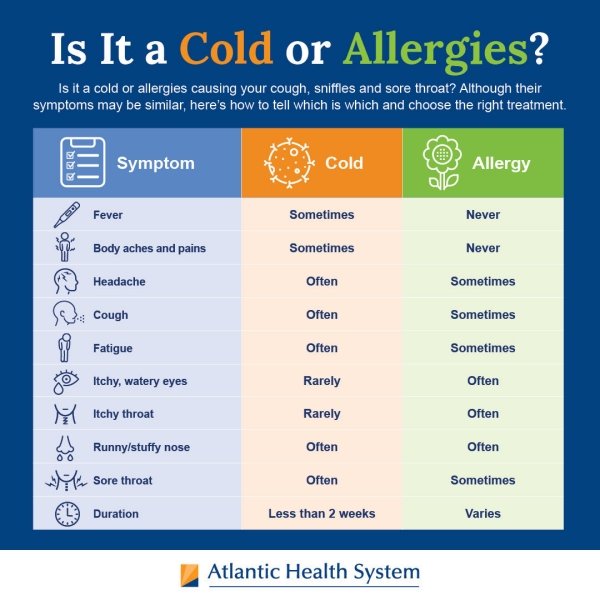
Duration is a crucial factor in assessing symptoms. If cold-like or allergy-like symptoms persist for more than 10 days without improvement, or if you experience severe symptoms like a high fever that won’t break, difficulty breathing, or chest tightness, you should seek medical attention immediately for an accurate diagnosis and effective treatment.
Seasonal Protection: How to Reduce Allergy Risks
For individuals prone to allergies, taking preventive measures during the high-pollen spring season can significantly reduce the risk of flare-ups. Experts recommend minimizing prolonged outdoor activities during peak pollen times (usually early morning and late afternoon). Additionally, keeping indoor spaces clean, closing windows and doors to block pollen, and using an air purifier can all help mitigate the onset of allergy symptoms.
