1. DGT Deploys New Surveillance System to Monitor VAO Lanes
Spain’s General Directorate of Traffic (Dirección General de Tráfico, DGT) has recently deployed a new automated surveillance system on the High-Occupancy Vehicle (Vehículo de Alta Ocupación, VAO) lanes of several motorways. This system, colloquially known as ‘black radars’ (radares negros) due to its discreet, dark appearance, is not designed for speed enforcement but to verify, using advanced technology, that vehicles comply with the minimum two-occupant rule.
VAO lanes (also known as Bus-VAO lanes) are dedicated lanes designed to encourage carpooling and reduce congestion. They are typically accessible to private cars with two or more occupants, public transport, and certain eco-friendly vehicles. Using a VAO lane can significantly reduce commute times during peak hours. However, solo drivers illegally using these lanes to gain an advantage is a common problem, with some even using mannequins or dolls in an attempt to deceive authorities.
2. Powered by AI and Infrared Technology with 95% Accuracy
The ‘black radar’ system integrates advanced technology to effectively distinguish between real passengers and fakes. Each unit consists of two synchronized cameras, one at the entrance of the VAO lane and another 50 to 100 meters further along. The cameras are equipped with infrared optical sensors and artificial intelligence image recognition software.
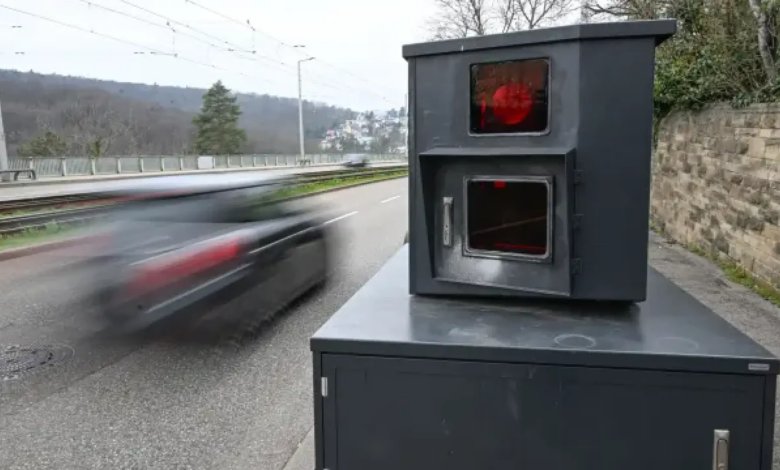
By analyzing thermal signatures and micro-movements, the system can differentiate between the contours of a real human and inanimate objects (like mannequins, pets, etc.) with an accuracy rate of up to 95%. It has a high processing capacity, capable of monitoring up to 1,000 vehicles per hour. Crucially, the entire enforcement process is fully automated, requiring no on-site police intervention, allowing for 24/7 operation and significantly increasing efficiency while reducing errors.
3. Violation Penalties and Exemptions
According to regulations, any unauthorized solo driver entering a VAO lane will be fined €200. When the system detects a violation, it automatically captures the vehicle’s license plate and generates a fine, similar to the process used by automated speed cameras. Violators who pay the fine within 20 days of notification can receive a 50% discount, paying only €100.
Not all solo drivers in VAO lanes will be penalized. The following are exempt:
- Vehicles transporting an officially certified disabled person.
- Zero-emission electric vehicles (specific rules may vary by section, so check local signage).
- Motorcycles (only on certain designated VAO lanes).
- Public transport vehicles, such as buses, taxis, etc.
4. Initial Deployment Locations and Future Expansion Plans
Currently, the ‘black radar’ system has been put into operation on key routes in the Madrid region:
- A-2 Motorway: Deployed on the new Bus-VAO lane that opened in the first quarter of 2026. The initial phase covers the stretch from Torrejón de Ardoz to Madrid city. This lane is planned to be extended to Alcalá de Henares, covering a total of approximately 19.2 km, and will operate intermittently, activated by traffic signals only during morning and evening peak hours.
- A-6 Motorway: As one of the first major routes in Madrid to have a VAO lane, its existing surveillance system has also been upgraded to the ‘black radar’ technology.
The DGT plans to expand this surveillance model to more cities throughout 2026, including new VAO corridors set to open in regions like Madrid and Valencia.
5. DGT Ramps Up Overall Enforcement in 2026
In addition to the new measures for VAO lanes, the DGT is also strengthening penalties for other traffic violations in 2026. For example, using a mobile phone while driving now results in a €200 fine and the deduction of 6 points from the driver’s license. Installing and using radar detectors can lead to a fine of up to €500 and a 3-point deduction. Furthermore, penalties for illegally entering Low-Emission Zones (ZBEs) have also been increased. Most fines are eligible for a 50% discount if paid within 20 days, but this does not apply to serious offenses that result in license suspension.
