Current License Plate System Nears Capacity Limit
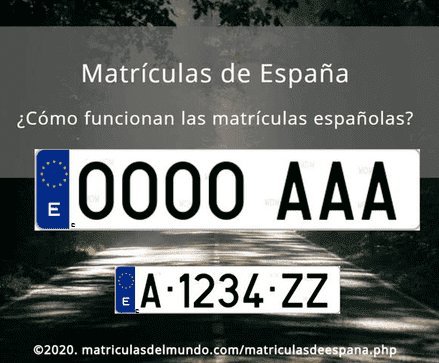
Spain’s current license plate system, adopted in 2000, is nearing the end of its lifespan. Since its launch, it has registered over 42 million vehicles. Based on the current growth rate of approximately 1.2 million new vehicle registrations per year, all available combinations are projected to be exhausted by around 2058. At that point, Spain will need to implement a completely new system to meet ongoing registration demands. Currently, new registrations are already using plates starting with the ‘NMR’ series.
The DGT’s Vision: Moving Towards the Smart Plate Era
Looking ahead, Spain’s General Directorate of Traffic (Dirección General de Tráfico, DGT) is actively planning a technological revolution. The future solution is likely to be a ‘smart license plate,’ no longer just a piece of metal but a digital terminal integrated with a QR code or even a microchip. By scanning the plate, law enforcement officers can instantly access key information such as the vehicle’s insurance validity, ITV technical inspection status, emissions rating, and even past accident records. This digital upgrade would overhaul the current paper-based verification process, significantly improving on-road enforcement efficiency and making traffic violations easier to track under digital surveillance.
The ‘Color Code’ of Spanish License Plates
Beyond the standard white plates for private cars, Spain’s traffic system uses different colored plates for specific vehicle types to maintain public order and safety. For instance, taxis and VTCs (Vehicles for Hire with Driver) use distinctive blue-background plates to combat illegal transport services. Additionally, red plates are typically assigned to large trailers or vehicles with temporary road authorization, yellow plates are for mopeds, and green plates are mainly for diplomatic vehicles or serve as temporary permits.
The Future of Traffic Management Through Technological Innovation
From traditional painted characters to future smart chips, the evolution of Spanish license plates has always centered on the core goal of enhancing social order and road safety. While technology changes, the fundamental role of the license plate as a vehicle’s ‘ID card’ and a ‘gatekeeper’ of the roads remains the same. The push for innovations like smart plates is ultimately aimed at protecting the rights of lawful drivers and ensuring that traffic regulations are enforced more accurately and efficiently on the road. For all road users, understanding and adapting to these changes is a key step toward integrating into the future of smart mobility.
