Introduction
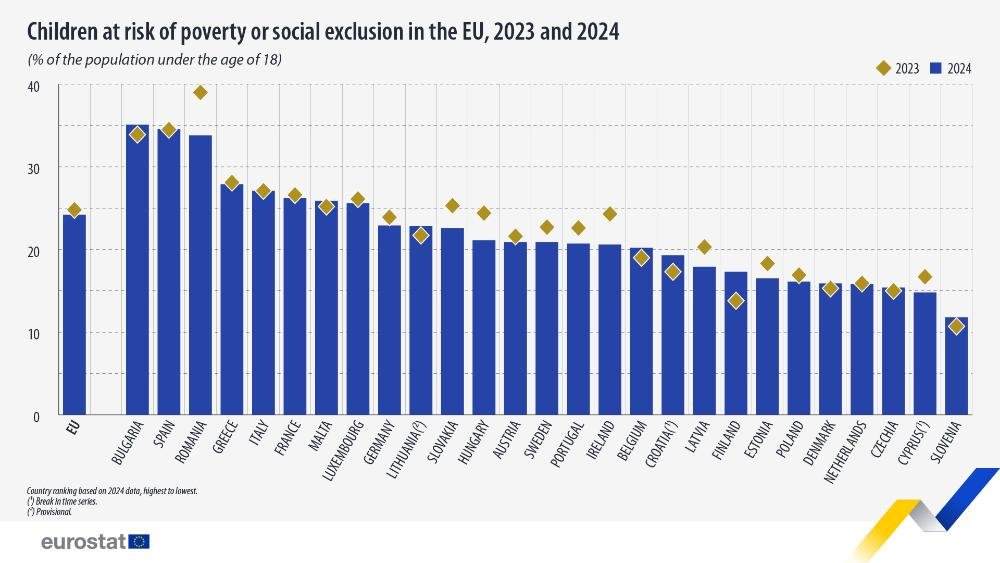
A new report based on Eurostat data and analysis by the Spanish branch of the European Anti-Poverty and Social Exclusion Network (EAPN-ES) has once again sounded the alarm on child poverty in Spain. The report reveals that in 2025, Spain’s child poverty rate topped the EU charts, highlighting the country’s deep-seated structural challenges in social security and resource distribution.
Child Poverty: Spain Leads the EU
The report’s core data shows that in 2025, 28.4% of minors under 18 in Spain were at risk of poverty. This figure makes Spain the country with the most severe child poverty problem among the 27 EU member states. Although this represents a 0.8 percentage point decrease from the previous year’s 29.2%, it remains nearly 9 percentage points higher than the EU average, indicating the problem is deeply entrenched.
Overall Poverty Situation: Ranking Fifth in the EU
From a broader perspective, Spain’s overall risk of poverty and social exclusion (the AROPE indicator) is also concerning. A total of 25.7% of the population, or about 12.6 million people, live at risk of poverty or social exclusion. This rate is the fifth highest in the EU, surpassed only by Bulgaria, Greece, Romania, and Lithuania. In comparison, the EU average is 20.9%.
A Multi-dimensional Analysis of Poverty in the EU
The report also sheds light on the complexity of poverty across the EU. At the time of the statistics, a total of 92.7 million people in the EU were at risk of poverty or social exclusion, a decrease of only about 600,000 from 2024. The data analysis reveals several key characteristics:
- Gender Disparity: Women face a higher risk. Across the EU, the risk rate for women is 21.9%, compared to 19.8% for men.
- Impact of Employment: Employment status is a decisive factor. The risk rate for the unemployed is a staggering 66.3%, while it is 10.9% for those who are employed.
- Family Structure: Households with dependent children are more vulnerable. In the EU, 22.1% of people living in such households face the risk of poverty or social exclusion.
Policy Responses and Future Outlook
In response to this critical situation, the EU is formulating countermeasures. The European Commission is scheduled to unveil its first “European Anti-Poverty Strategy” on May 6. Previously, the European Parliament had adopted a related position in February, calling for the strategy to be comprehensive, ambitious, and human rights-based, sending a clear political signal to the Commission.
EAPN-ES has welcomed this development and called for more concrete actions from both Spain and the EU. The organization emphasizes the need for adequate funding for these policies and ensuring the active participation of people experiencing poverty in their design and implementation. Furthermore, the urgent introduction of supportive housing policies and fair tax reforms are considered key measures to eradicate poverty and reduce inequality, aiming to guarantee a dignified life for all citizens.
