Drastic Imbalance Between Housing Prices and Income Growth
According to a report from the real estate portal Pisos.com, Spain’s housing affordability issue is becoming increasingly severe. Since 2016, the average house price in Spain has seen a staggering 68.4% increase, while average wages have only grown by 34% during the same period. This data clearly reveals the reality that property value appreciation is far outpacing income growth. By 2025, the national average house price had climbed to €2,164 per square meter, a stark contrast to the €1,285 per square meter a decade ago. In major cities like Madrid, prices have surpassed the psychological barrier of €5,157 per square meter, placing immense financial pressure on first-time buyers.
Supply and Demand Imbalance is the Root Cause
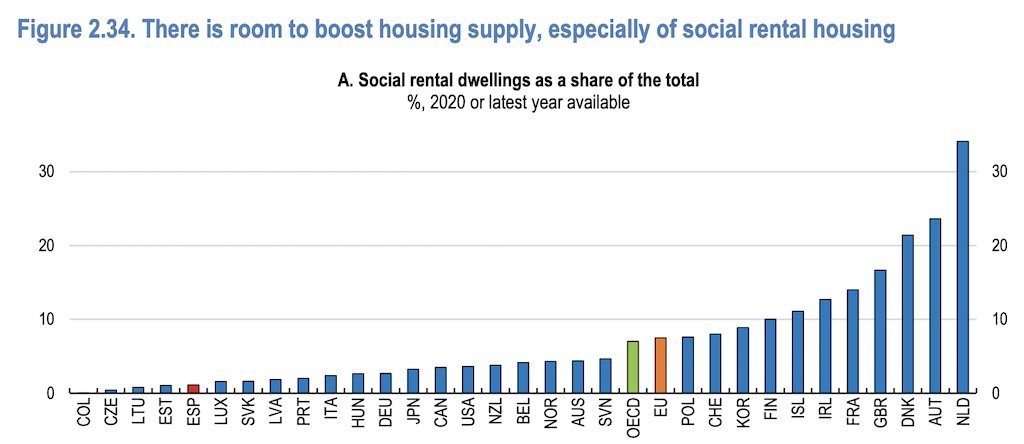
Industry expert Ferran Font explains that the root cause of this decoupling between house prices and wages is a long-term structural imbalance between supply and demand. Data shows that in the last four years, the demand for new homes in Spain approached 890,000 units, yet the supply of new housing on the market was less than 400,000 units. This demand gap of more than double has directly fueled the continuous and rapid rise in house prices, causing its growth rate to consistently outpace wage increases. This supply shortage is the core reason for the current overheated real estate market.
2025: A Year of Active Trading with Underlying Risks
Despite high prices, the Spanish real estate market was exceptionally active in 2025, with a total of 714,000 home sales for the year, setting a new high since the last property bubble burst. The main drivers of this transaction volume were move-up buyers with equity, families who secured low-interest mortgages, and investors confident in the market. However, the outlook is not without its challenges. Recent geopolitical uncertainties, particularly due to conflicts in the Middle East (such as the Iran conflict), could lead to a resurgence of inflation and interest rate volatility. This would not only affect future mortgage approvals but could also drive up construction material costs, further impacting new housing prices.
Early 2026: Signs of Moderation and Future Challenges
Entering 2026, the market has shown initial signs of cooling down. Home sales in the first two months of the year saw a slight decrease of 2.8% compared to the same period in 2025. Analysts believe that after last year’s transaction peak, this minor adjustment is a normal phenomenon and does not signify an impending market collapse. The real test lies in the future direction of monetary policy. If the European Central Bank decides to raise interest rates again to curb inflation, first-time buyers who are already struggling to get on the property ladder will face even higher barriers. This could escalate the housing affordability issue from an economic problem to a profound social conflict.
