Spain Busts Morocco-Ceuta ‘Drug Tunnel,’ Unveiling a Massive Transnational Smuggling Network
Spain’s National High Court is currently presiding over a case involving a large-scale transnational drug trafficking network. The network utilized a sophisticated logistics system and a ‘secret tunnel’ in North Africa for drug smuggling and money laundering. The investigation, codenamed ‘Operation Ares,’ is being led by Spain’s Central Unit for Drugs and Organized Crime (UDYC).
The ‘Drug Tunnel’ and Smuggling Route Revealed
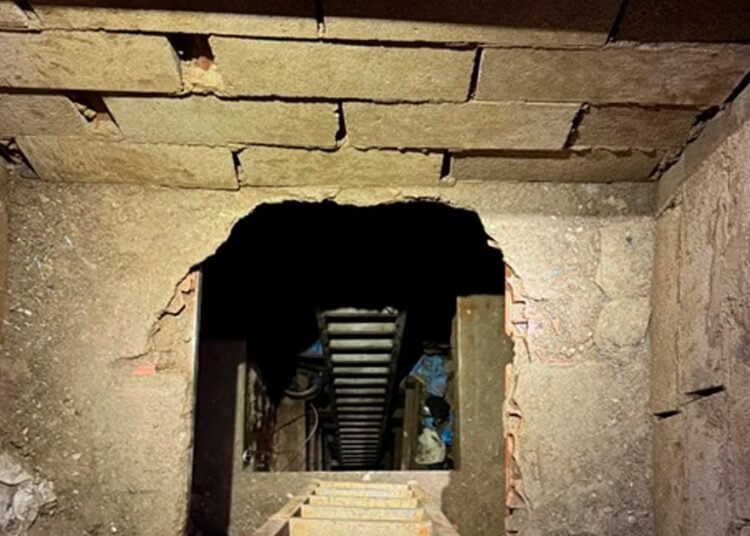
At the heart of the case is a secret underground passage located in the Tarajal area. To clarify, this is not a tunnel under the Mediterranean Sea, but a passage connecting Morocco to Ceuta, a Spanish enclave in North Africa. As Ceuta shares a land border with Morocco, the tunnel essentially served as a shortcut for smuggling across the border.
The gang’s operations were highly professional: first, drugs like hashish were consolidated in Morocco and smuggled into Ceuta through the tunnel. Then, speedboats or specially modified freight vehicles with hidden compartments were used to transport the drugs to mainland Spain. Finally, the drugs were distributed from Spain to other European countries, forming a complete illicit supply chain.
Major Successes of ‘Operation Ares’
Investigators have linked the criminal network to at least six major drug smuggling cases. During ‘Operation Ares,’ police have achieved several significant breakthroughs. The most notable was the interception of a truck in Almería, which was found to contain 15 tons of hashish.
Additionally, Spanish police have seized hundreds of kilograms of drugs in various locations, including Ceuta and Málaga. The investigation has also expanded into the financial realm. In February of this year, police seized a large sum of cash in Algeciras, believed to be illegal proceeds from the network. Related money laundering activities are currently under investigation.
Cross-Border Cooperation Challenges and Geopolitical Questions
According to Spanish media reports, despite the severity of the case, Moroccan authorities have been uncooperative in the investigation, failing to provide meaningful assistance to Spanish judicial authorities regarding leads on the ‘hashish tunnel.’ This has created challenges for the cross-border investigation.
What has raised further questions is the highly sensitive location of the newly discovered tunnel entrance, which is not only near a military base but also in an area under constant, strict surveillance. How the drug cartel managed to operate the tunnel for so long in such a heavily monitored environment has become a key focus of the investigation, fueling speculation about potential complex circumstances behind the scenes.
