Hantavirus Cruise Ship Docks in Tenerife; Spain Implements Strict Quarantine
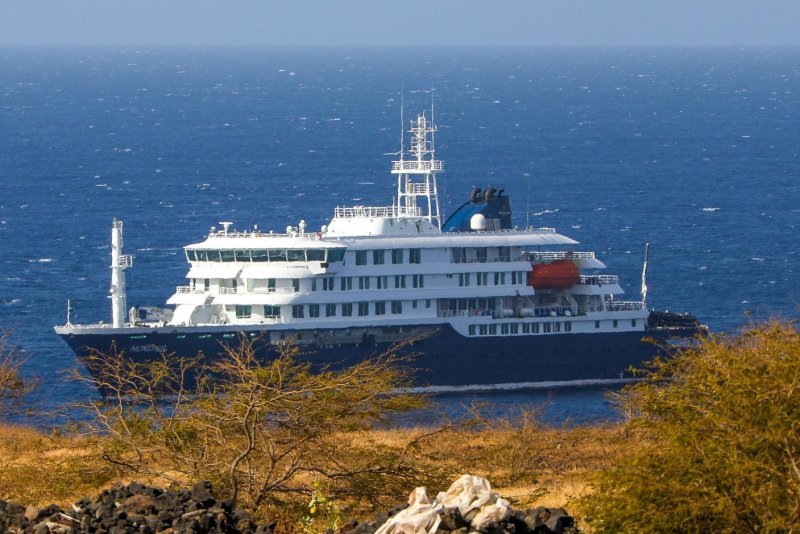
The MV Hondius, a Dutch-flagged cruise ship, arrived at the port of Tenerife in the Canary Islands, Spain, at noon on May 10, 2026, following a Hantavirus outbreak during its voyage. The vessel is carrying a total of 149 passengers and crew from 23 different countries.
On humanitarian grounds, the Spanish government permitted the ship to dock. However, given the severity of the virus and concerns from the local population, authorities have implemented extremely strict containment measures. The cruise ship was ordered to anchor approximately 500 meters offshore and is not allowed to berth directly. All personnel evacuations are being conducted in batches via small barges, with the entire process closely monitored by armed guards to prevent any direct contact with the outside world.
Multinational “Air Bridge” Evacuation Underway
As the ship’s occupants reached land, a multinational evacuation effort was quickly launched.
France: The government dispatched a special aircraft to repatriate the five French citizens on board, which landed at Paris-Le Bourget Airport. On May 11, it was reported that one of these citizens subsequently tested positive for the virus. As a result, French health authorities have placed all five individuals and 22 close contacts under a quarantine and observation period of at least 45 days.
Spain: A military aircraft transported 14 Spanish nationals back to the capital, Madrid, where they were placed in specialized isolation wards at the Gómez Ulla Military Hospital for treatment and observation.
Canada and Australia: Both governments also arranged for special flights to repatriate their citizens.
The Netherlands and Greece: The two countries coordinated their efforts. Greek tourists first flew to Amsterdam on a flight arranged by the Netherlands, where they then transferred to a connecting flight back to Athens.
The entire evacuation operation continued until the afternoon of May 11. After the final flights to Australia and the Netherlands departed, only about 30 crew members remained on board, tasked with sailing the empty ship back to the Netherlands.
Outbreak Assessment: High Fatality Rate but Low Risk of Widespread Epidemic
According to the latest data, eight people on board have been confirmed to be infected with Hantavirus, and tragically, three have died. Although the high fatality rate has drawn global attention, the World Health Organization (WHO) and national public health agencies, including the Public Health Agency of Canada, assess the likelihood of this outbreak developing into a large-scale epidemic as low.
Experts point to several reasons for this assessment:
Limited Transmission Route: While the Andes strain discovered in this outbreak can rarely spread from person to person, transmission primarily occurs through prolonged close contact or direct contact with a patient’s bodily fluids, unlike the efficient airborne transmission seen with viruses like COVID-19.
Clear Symptoms Aid Containment: The symptoms of Hantavirus infection (high fever, muscle aches, pulmonary edema) appear quickly and are severe, which helps in the early detection and isolation of patients, effectively breaking the chain of transmission. The long 45-day quarantine period also provides a safeguard for control.
Lack of Local Vectors: The specific rodents that are the primary hosts of the virus (carriers of the Andes strain) are mainly found in South America and are not present in Europe or Asia. This fundamentally prevents the virus from establishing a natural reservoir in the countries where the evacuees have arrived.
WHO Director-General Tedros Adhanom Ghebreyesus traveled to Tenerife to coordinate the response, emphasizing to the media, “This is not another COVID-19.” He stated that with a science-based containment strategy, the outbreak is expected to be kept within its current scope.
Cruise Industry Hit Again: Another Ship Reports Outbreak
While the MV Hondius incident captures global attention, the cruise industry faces another blow. According to ABC News, the U.S. Centers for Disease Control and Prevention (CDC) confirmed on May 7 that a large-scale Norovirus outbreak occurred aboard the Caribbean Princess, a ship operated by Princess Cruises.
The ship was carrying 3,116 passengers and 1,131 crew members. At the time of the report, 115 people (102 passengers and 13 crew members) had developed symptoms such as vomiting and diarrhea. The vessel is scheduled to arrive at Port Canaveral, Florida, on May 11. Officials and media have stressed that while Norovirus is highly contagious, it is typically not fatal and is completely unrelated to the Hantavirus incident on the MV Hondius.
