UK University Unveils Smart Pillowcase in Barcelona to Boost Home Safety for the Deaf and Hard of Hearing
For individuals who are deaf or hard of hearing, promptly detecting emergencies like fires or burglaries while asleep has long been a significant safety challenge. Traditional audio-based alarm systems are ineffective for them, potentially causing them to miss crucial escape time. An innovative technology designed to change this has officially been unveiled on Spain’s tech stage.
Innovative Launch at Barcelona Tech Conference
At the premier ACM CHI 2026 conference on Human-Computer Interaction held in Barcelona, Spain, a research team from the UK’s Nottingham Trent University unveiled a revolutionary smart pillowcase. This product directly addresses the sensory barriers faced by the deaf and hard of hearing community in emergencies, offering a novel solution that garnered significant attention at the conference.
The Core Principle: Smart Fabric Technology
The core of this smart pillowcase lies in its embedded smart fabric technology. It looks and feels nearly identical to a standard pillowcase but integrates four imperceptible micro-vibration points. A microcontroller connects wirelessly to the user’s smartphone, allowing the system to receive alert signals from smoke detectors or security systems.
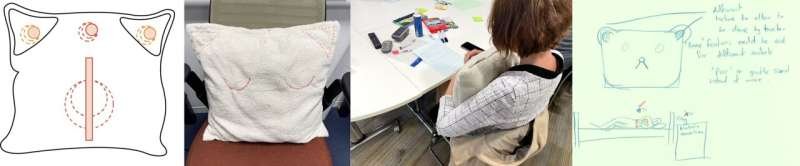
Upon receiving a fire or intruder alert, the pillowcase activates immediately, waking the sleeping user with strong, specific-frequency vibrations. Unlike existing bulky, external vibrating devices on the market, this pillowcase is extremely thin, soft, and fully machine-washable. It seamlessly integrates technology with everyday items, eliminating discomfort during sleep.
A Key Step from Lab to Market
According to the development team, the smart pillowcase technology has moved beyond the proof-of-concept stage and has successfully passed rigorous tests in real-world daily use scenarios, proving its reliability and effectiveness.
The Nottingham Trent University team is now actively seeking commercial partners to facilitate the product’s large-scale production and market launch. The widespread adoption of this technology is poised to provide a robust and intimate “invisible safety net” for deaf and hard of hearing individuals and other vulnerable groups worldwide, fundamentally enhancing their sense of security at home.
