Spain’s health system confirmed on May 12 that a Spanish citizen, who was previously under quarantine observation in Madrid, has tested positive for Hantavirus and is now a confirmed case. This is the first confirmed case of Spanish nationality related to the recent cluster outbreak on the Antarctic cruise ship ‘MV Hondius’.
Case Details and Current Status
According to a statement from the Spanish Ministry of Health, the confirmed patient is currently in isolation and receiving treatment at the Gómez Ulla Central Defense Hospital in Madrid. The patient reportedly began experiencing a low-grade fever, mild respiratory symptoms, and a slight drop in blood oxygen saturation on Monday evening. Despite these symptoms, the patient’s overall clinical condition remains stable, with no signs of deterioration.
The case was confirmed after multiple tests. The initial PCR test result was marked as “provisionally positive,” and after a subsequent retest confirmed the positive result, health authorities officially classified it as a confirmed case.
Outbreak Origin and International Context
The source of this infection points to the Hantavirus cluster outbreak on the Antarctic cruise ship ‘MV Hondius’. World Health Organization (WHO) Director-General Tedros Adhanom Ghebreyesus revealed that, to date, the number of global confirmed cases related to this cruise ship outbreak has risen to 11. All suspected and confirmed individuals have been effectively isolated and are under strict medical surveillance to control further spread of the virus.
Tedros also noted that despite the new cases, the global public health risk assessment currently remains at a “low” level. However, given the long incubation period of Hantavirus, health experts warn that more related cases could emerge in the coming weeks.
Fellow Passengers’ Testing and Arrangements
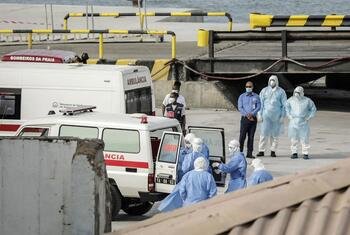
A total of 14 Spanish passengers were evacuated from the ‘MV Hondius’ cruise ship along with the confirmed patient. The Spanish government had previously activated an emergency plan, chartering a special flight to transfer this group from the Canary Islands to the Gómez Ulla military hospital in Madrid for quarantine and observation. Apart from the one confirmed case, the final test results for the remaining 13 Spanish passengers were all negative. These passengers come from various regions of Spain, including five from Catalonia, three from Madrid, three from Asturias, and one each from Castile and León, Galicia, and the Valencian Community.
Furthermore, an American passenger previously classified as “weakly positive” by U.S. health authorities has since had their final test result confirmed as negative, ruling out an infection.
