National Storage Plan Launched to Prevent Major Blackouts
Spain vividly remembers the massive grid collapse on April 28, 2025, which disrupted essential services nationwide and highlighted the energy system’s vulnerability. To prevent such incidents from happening again, Spain’s Ministry for the Ecological Transition has officially made “energy storage” a core strategy for the national energy transition. In this context, the National Hydropower Storage Plan (PNAHE) was created. On March 31, 2026, the development contract for this plan was awarded to a consortium led by the engineering consultancy TYPSA, marking a crucial step for Spain in building a stable and reliable future grid. The contract involves a 24-month period of preliminary studies and planning to systematically assess the potential of reservoirs nationwide and create a viable project portfolio, rather than commencing immediate construction.
The Salamanca “Super-Battery”: Pumped-Storage Hydropower Explained
In the preliminary plans, the Navamuño reservoir project in the province of Salamanca is highly anticipated, positioned as a national-level “giant battery.” According to the draft design, the project is planned to have an installed capacity of 280 megawatts, capable of supplying power at its rated output for up to 8 hours, with a total storage capacity of 2.24 gigawatt-hours (GWh).
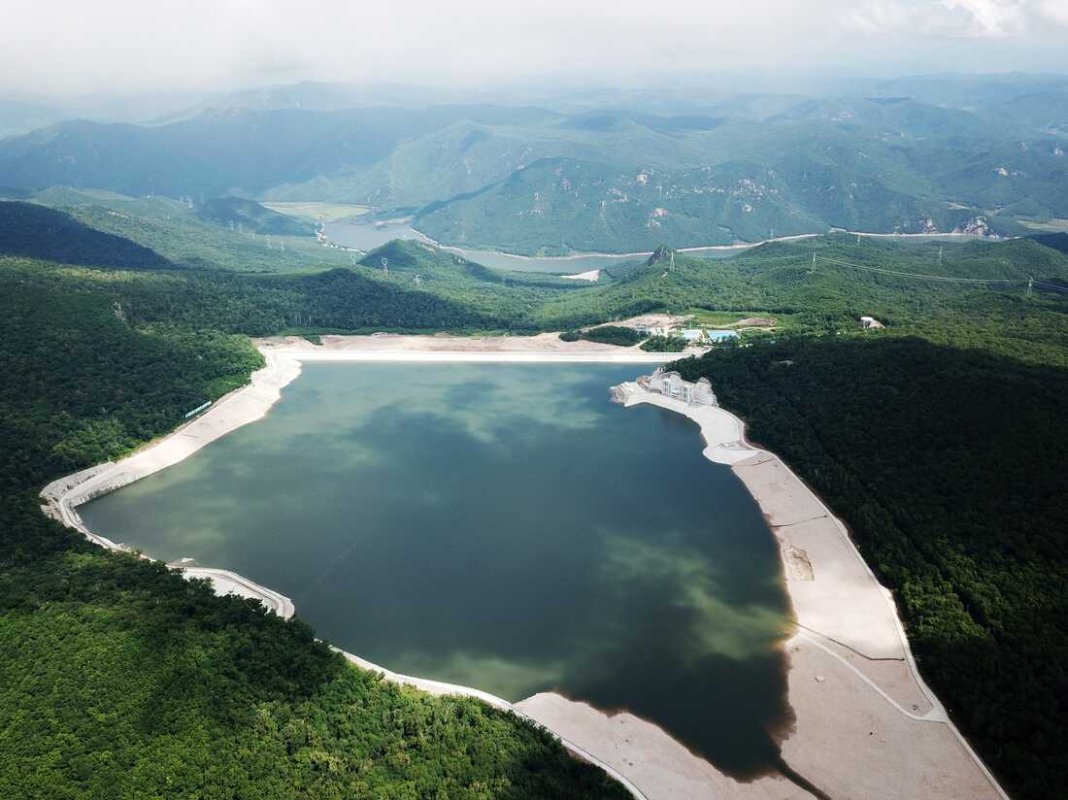
The core principle of this technology is known as “pumped-storage hydropower.” During periods of low electricity demand or when there is a surplus of renewable energy generation (from sources like solar and wind), excess power is used to pump water from a lower reservoir to an upper one, converting electrical energy into potential energy for storage. When electricity demand peaks or renewable generation is insufficient, the water from the upper reservoir is released to drive turbines and generate electricity, thereby performing grid services like peak shaving, valley filling, and frequency regulation.
Strategic Goal: Increasing Renewable Energy Integration
The Spanish government has set a clear strategic goal: by 2030, through the large-scale deployment of storage technologies and the development of the green hydrogen industry, it aims to drastically reduce the curtailment rate of renewable energy (energy wasted due to inability to connect to the grid) from the current 14% to 6%. This will not only help ensure the stability of the power system but also effectively smooth out sharp fluctuations in wholesale electricity prices by storing energy during low-price periods and releasing it during high-price periods, ultimately benefiting end consumers. Pumped-storage hydropower plants, as one of the most mature and cost-effective energy storage methods available, play an indispensable role in achieving this objective.
Progress and Outlook: Project Remains in Strict Assessment Phase
Although the Navamuño project is gaining significant attention, its construction is not imminent. The project is currently undergoing complex administrative and environmental assessment processes. It must pass a highly rigorous Strategic Environmental Assessment (SEA) to ensure that the works will not negatively impact local ecological flows, water rights, or the surrounding environment. According to forecasts from the Spanish Association for Energy Storage (Asealen), the official bidding process for the project is not expected to begin until the end of 2027, with large-scale construction projected to start before 2035. This reflects Spain’s cautious approach of balancing efficiency with environmental protection while advancing its energy liberalization.
