Spain’s Youth Unemployment Hits 24.3%, Topping the EU and Highlighting Structural Labor Market Issues
According to the latest data released by Eurostat, the unemployment rate in the Eurozone fell to a historic low of 6.2% in March. Meanwhile, the unemployment rate for the entire European Union remained stable at 6.0%. However, against this generally positive backdrop, Spain’s labor market, particularly the issue of youth employment, presents a worrying trend.
Overall Improvement in EU Labor Market, but with Clear Divergence Among Member States
The data shows that in March, there were 13.22 million unemployed people in the EU, with 10.98 million of them in the Eurozone. Compared to the same period last year, the number of unemployed decreased by 24,000 in the EU and 170,000 in the Eurozone, indicating a moderate recovery in the labor market.
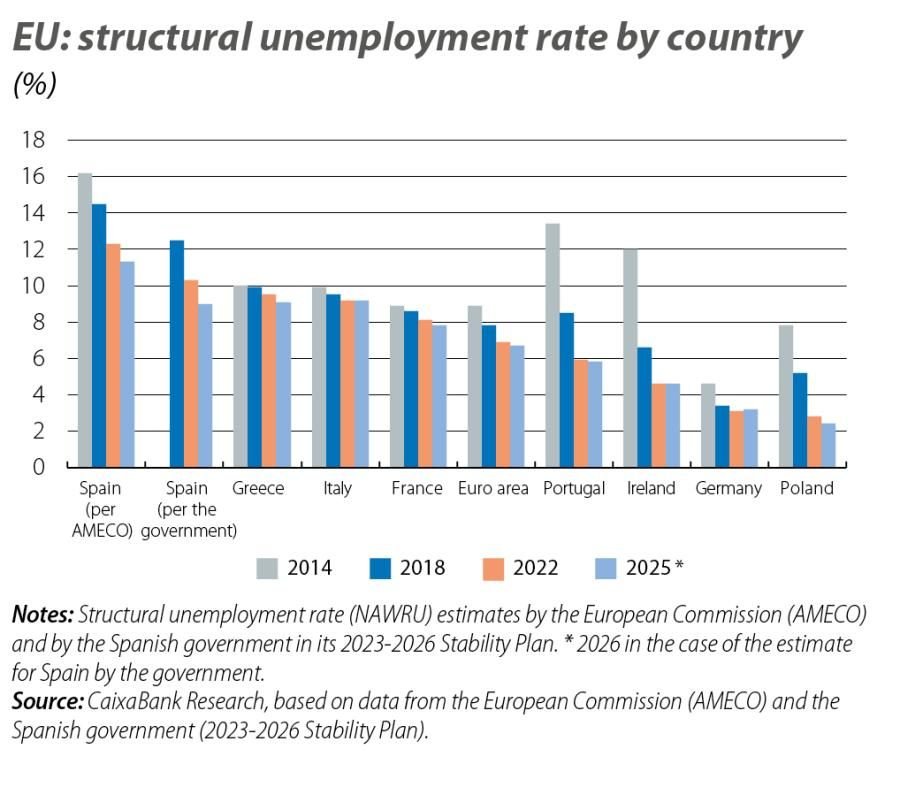
However, employment situations vary significantly among member states. Czechia had the best-performing labor market with an unemployment rate of 3.1%, while Bulgaria and Poland also maintained low rates of 3.2% and 3.3%, respectively. In contrast, some countries still face severe unemployment problems, with Finland’s rate at 10.4%, followed closely by Spain at 10.3%, and Greece at 9%.
Youth Employment Crisis Becomes a Core Pain Point
For the under-25 age group, employment prospects are generally dimmer than for other age groups. In March, the EU’s youth unemployment rate rose slightly to 15.4%, while the Eurozone’s remained at 14.9%. This means that 2.97 million young people in the EU are jobless, with 2.35 million of them in the Eurozone. The youth employment issue has become a long-term core challenge for the European labor market.
Spain’s Youth Unemployment Rate Ranks Highest
Against this backdrop, Spain’s youth employment problem is particularly prominent. The data reveals that the country had a total of 2.596 million unemployed people in March, of which 460,000 were under 25. Its youth unemployment rate climbed to 24.3%, a figure not only far above the EU average but also the highest among all member states, surpassing Sweden’s 24.2% and Finland’s 22.3%.
Although Spain’s overall economy is on a recovery track, the high youth unemployment rate exposes deep-seated structural contradictions in its labor market. How to effectively formulate and implement policies to promote youth employment has become a major economic and social challenge that the Spanish government urgently needs to address.
