A Contemporary Return of a Traditional Festival
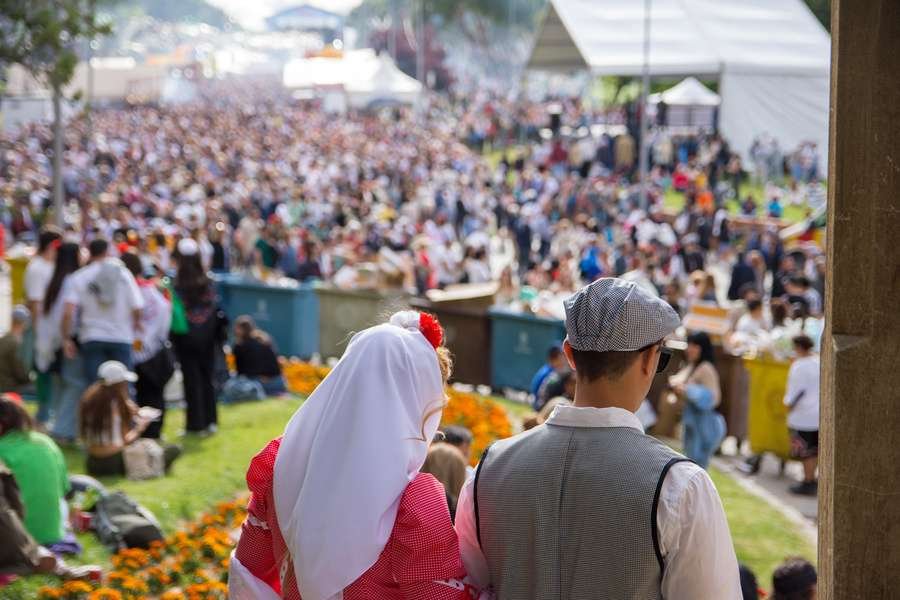
May 15th marks the festival of Madrid’s patron saint, San Isidro. Today, this once-fading holiday for locals is transforming into a major cultural event drawing large crowds of young people. Unlike in the past, the celebrations are no longer confined to the festival day itself. They now begin after the Dos de Mayo holiday and continue throughout May with various open-air parties. Painter Javier de Juan describes May in Madrid as a time when “everyone is out on the streets,” believing San Isidro represents “the tenderest side of Madrid.”
The younger generation are the core participants in this revival. Manuela Rodríguez, a 28-year-old Madrid resident, wore the traditional ‘chulapa’ dress for the first time in 2024 to join the celebrations. For her, it’s not just about having fun but about celebrating “that Madrid has always been a home for everyone, yet belongs to no one,” highlighting its inclusive nature.
The Social Context of a Cultural Revival: Resisting the Loss of Identity
The renewed enthusiasm for San Isidro among young people is no accident. Sofía Nieto, co-founder of the local designer brand Carmen 17, points out that this phenomenon is closely linked to Madrid’s growing urban gentrification (gentrificación). She believes a “tipping point” was reached when familiar neighborhood bars turned into chain establishments and traditional artisan shops were replaced by multinational brands.
“We suddenly felt our urban identity was under threat,” Nieto analyzes. This sense of crisis has prompted many, especially the youth, to re-examine and cherish the value of local folklore (folclore popular) and neighborhood communities. Participating in the festival has become a way to occupy public space and gain a sense of belonging without the need to consume.
“New Madrileños” and Rule-Breaking Innovation
Notably, a significant portion of those leading this revival are not native-born Madrileños. As Sofía Nieto observes, “We don’t have to stick to the old rules; we play with tradition in our own way.” This “rule-free” approach to participation is breathing new life into the ancient festival.
Young people are boldly deconstructing tradition, for instance, by breaking gender barriers in attire, allowing men to wear elements of traditional female dress, or having queer communities reinterpret and modify them. They print critical slogans on the backs of traditional garments, forging a new, warm emotional connection with the city through clothing. This trend is not only seen among the general public but has also attracted cultural figures. For example, Catalan musician Joe Crepúsculo, who has lived in Madrid for over a decade, donned the traditional men’s cap for the first time to take part.
The Duality of the Festival: Resistance or Commercial Tool?
This cultural revival also raises deeper questions. In his 2021 book The Dawn of Everything, anthropologist David Graeber proposed that festivals have a dual nature: they can be a “safety valve” for releasing social pressure, or a “political laboratory” for subverting rules and sparking imagination.
The current San Isidro fever embodies this duality. Is it a gentle resistance rooted in neighborhood communities, or a tool exploited by political and commercial forces to boost consumption and tourism? On this, painter Javier de Juan believes Madrid’s core charm lies in its “fusion” rather than a deliberately crafted “pure Madrid spirit.” He recalls a time in Madrid when punks and aristocrats could coexist harmoniously. From Emilia Pardo Bazán’s 1911 novel Insolación (Sunstroke), where the aristocratic protagonist attends the pilgrimage, to today’s non-native youth revitalizing the traditional festival, this spirit of openness and fusion may be the truest essence behind the San Isidro revival.
