I’ve noticed a lot of questions on forums recently about choosing a major in Spain, particularly in the humanities. As a sociology student at the Complutense University of Madrid, I thought I’d share my experience and give you an insider’s look at what this major entails, hopefully helping anyone feeling undecided.
For many, the idea of sociology at Spanish universities might conjure up images of ‘census taking’ or ‘street interviews,’ making it seem rather vague. In reality, sociology in Spain is a highly systematic and rigorous discipline. It equips us with a critical lens to analyze social phenomena, covering everything from our daily routines to broader issues like national policy and globalization. In short, you learn to scientifically understand the fundamental mechanics of how society operates.
The curriculum heavily emphasizes theory and methodology. The first two years are dedicated to foundational theories and research methods, building a solid base for advanced studies. While it can be a bit dry, I found that grasping the logical framework of key thinkers is far more crucial than simple rote memorization.
Core Courses in a Spanish Sociology Undergrad Program
| Spanish Course Name | Course Focus |
|---|
| Teoría Sociológica Clásica | The big three: Marx, Weber, and Durkheim |
| Métodos de Investigación Social | Quantitative & qualitative research, survey design, and data analysis for sociology programs at Spanish universities |
| Estructura Social de España | Analysis of class, inequality, family structure, etc., in Spain |
| Sociología de la Población | Topics like migration, aging, and fertility rates |
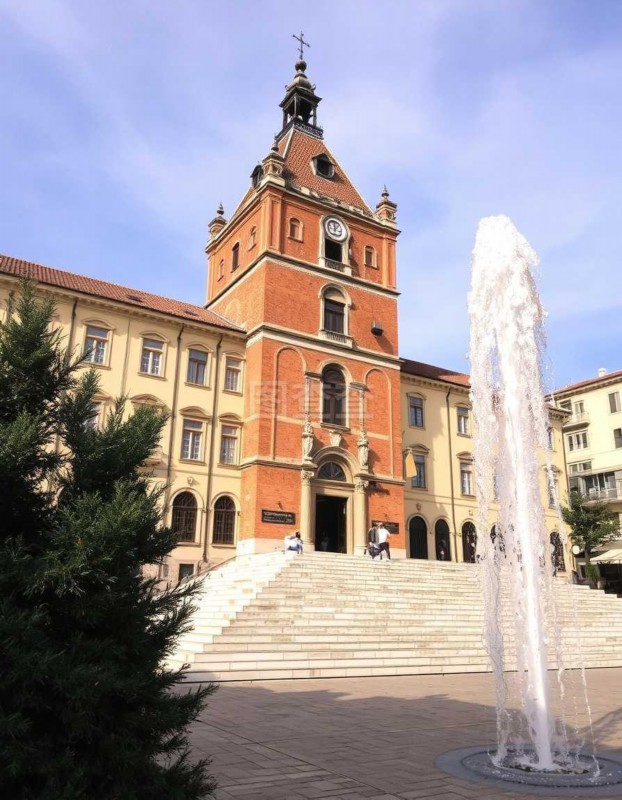
Learning extends far beyond the classroom. The university strongly encourages participation in practical projects, like conducting social surveys for NGOs or interning at market research firms. These experiences are invaluable, allowing you to apply theoretical knowledge to real-world situations. Last semester, for instance, I worked on a project about the youth housing challenges in Madrid. It was tough, but immensely fulfilling.
Finally, let’s tackle the question on everyone’s mind: career prospects. Frankly, a sociology degree doesn’t lead to a single, clear-cut career path like accounting or computer science. Its real value lies in honing your analytical abilities, critical thinking, and research skills. Graduates find opportunities in government departments, non-governmental organizations (NGOs), corporate HR and marketing, consulting firms, media, and more. The career options are surprisingly diverse; the key is to effectively leverage your academic skills in a professional context. Hope this has been helpful, and I look forward to discussing it more with you all!
