Macroeconomic Context: Renewed Inflationary Pressure and a Shift in Central Bank Policy Expectations
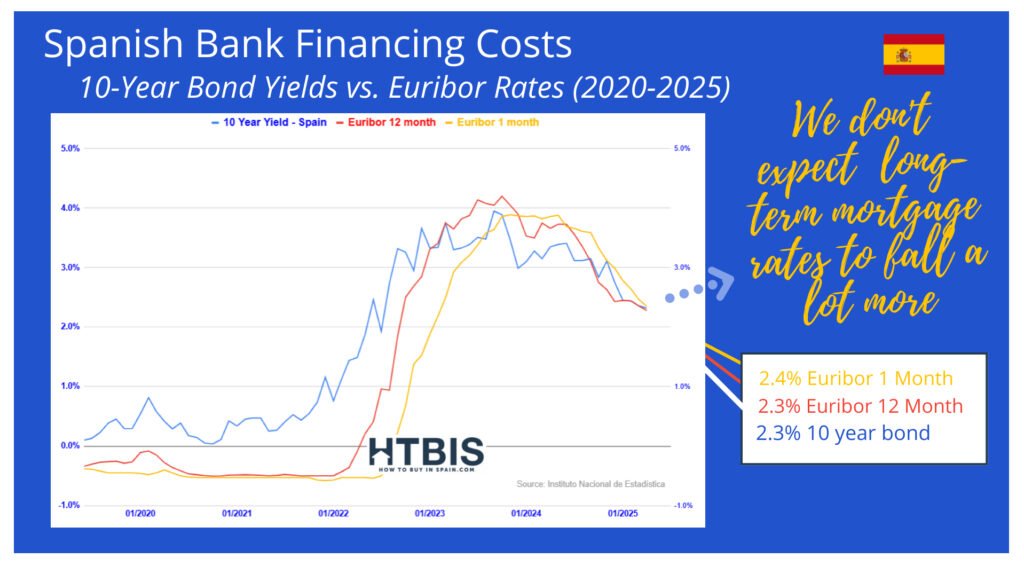
Recent escalations in geopolitical conflicts involving the US, Israel, and Iran have shocked global energy markets, causing international oil prices to surge. These events have led to a resurgence of inflationary pressure in Europe, shattering previous market expectations of an imminent interest rate cut by the European Central Bank (ECB).
Financial analysts’ views have reversed, suggesting that high inflation will not only prevent the ECB from cutting rates in the short term but may even force it to consider further hikes to stabilize prices. Astute commercial banks, aiming to lock in long-term funds at a relatively lower cost in advance, have begun competing for saver deposits by raising interest rates.
A Comparison of Top High-Yield Products on the Market
In this latest “battle for deposits,” several banks, especially digital ones, have launched competitive deposit products with no strings attached:
- Banca March & Bankinter: Both banks offer new digital account customers a one-year fixed-term deposit with a 2.5% annual interest rate.
- Trade Republic: This German digital bank has adopted the most aggressive strategy, offering new customers a 3.0% interest rate on cash balances, with no deposit limit.
- Renault Bank: The bank offers a 36-month (3-year) fixed-term deposit with an Annual Equivalent Rate (AER/TAE) of 3.03%, suitable for savers with long-term idle funds.
- SelfBank: Its 12-month fixed-term deposit offers an AER (TAE) of 2.75%, with a minimum deposit of €6,000 and a maximum of €50,000. A key feature is that interest is paid out quarterly.
Beware of Complex Conditions Behind High Rates
Some traditional banks have also advertised nominally higher interest rates, but these often come with complex conditions. For example, Deutsche Bank’s advertised 3.25% annual rate requires savers to meet several bundled requirements to receive the full return.
The base interest rate for this product is only 2.25%. To achieve the full 3.25%, customers must:
- Have a monthly salary (nómina) of at least €2,000 paid directly into the account (adds 0.2%).
- Spend at least €6,000 annually with the bank’s credit card (adds 0.2%).
- Invest at least €15,000 in the bank’s designated closed-end investment funds (adds 0.6%).
This model, which links deposit interest to mandatory spending and high-risk investments, adds extra burdens and potential risks for savers, who should scrutinize such offers carefully.
The Race Between Deposit Returns and Inflation
According to data from the Bank of Spain, Spanish savers hold a staggering €1.1 trillion in cash deposits. While a 3% deposit rate is attractive, it’s crucial to watch inflation figures. Spain’s annual inflation rate reached 3.2% in April.
This means that if the deposit interest rate is lower than the inflation rate, the real purchasing power of savers’ money is still declining. Therefore, moving funds from zero or low-interest traditional accounts to deposit products offering higher returns has become an important consideration for preserving asset value in the current economic climate.
