From Accident to Murder: The Case’s Critical Turn
On December 14, 2024, Isak Andic, founder of the Spanish fashion brand Mango, died at age 71 after falling approximately 150 meters from a cliff while hiking in the Collbató area near Barcelona. The death was initially classified as an accident. However, nearly a year and a half later, the investigation took a significant turn. The Catalan police (Mossos d’Esquadra) recently arrested the victim’s son, Jonathan Andic. He was released after testifying before Martorell’s Investigating Court No. 5 and posting a €1 million bail. He remains a murder suspect and is subject to court-ordered measures. Upon unsealing the case, the judge indicated that evidence suggests Jonathan may have planned the murder, motivated by an “obsession with money” and fear that his father would alter his will.
Suspicion #1: Unexplained “Intentional” Footprints
One of the key pieces of evidence cited in the court order is the footprints found at the scene of the fall. The Mossos d’Esquadra’s mountain rescue unit, which is leading the investigation, conducted 10 on-site simulations and concluded that to create footprints consistent with the marks at the scene, “at least four back-and-forth friction movements” would have been necessary.
The report emphasizes that this type of friction requires “a conscious application of pressure on the ground” and therefore could not have been created by a single slip during an accidental fall. Based on this, the judge determined that the marks at the scene were “deliberately made” to create the false impression of a “slip and fall,” thus fundamentally questioning the accidental death theory.
Suspicion #2: Contradictions Between Forensic Report and Testimony
The forensic report provides another critical perspective. It states that Isak Andic’s fall pattern was “like sliding down a slide, feet first,” with all injuries concentrated on the right side of his body and distributed in an upward pattern. Notably, there were “no injuries to his palms,” which rules out the possibility that he instinctively used his hands to break his fall or brace himself, a detail inconsistent with a typical accidental fall.
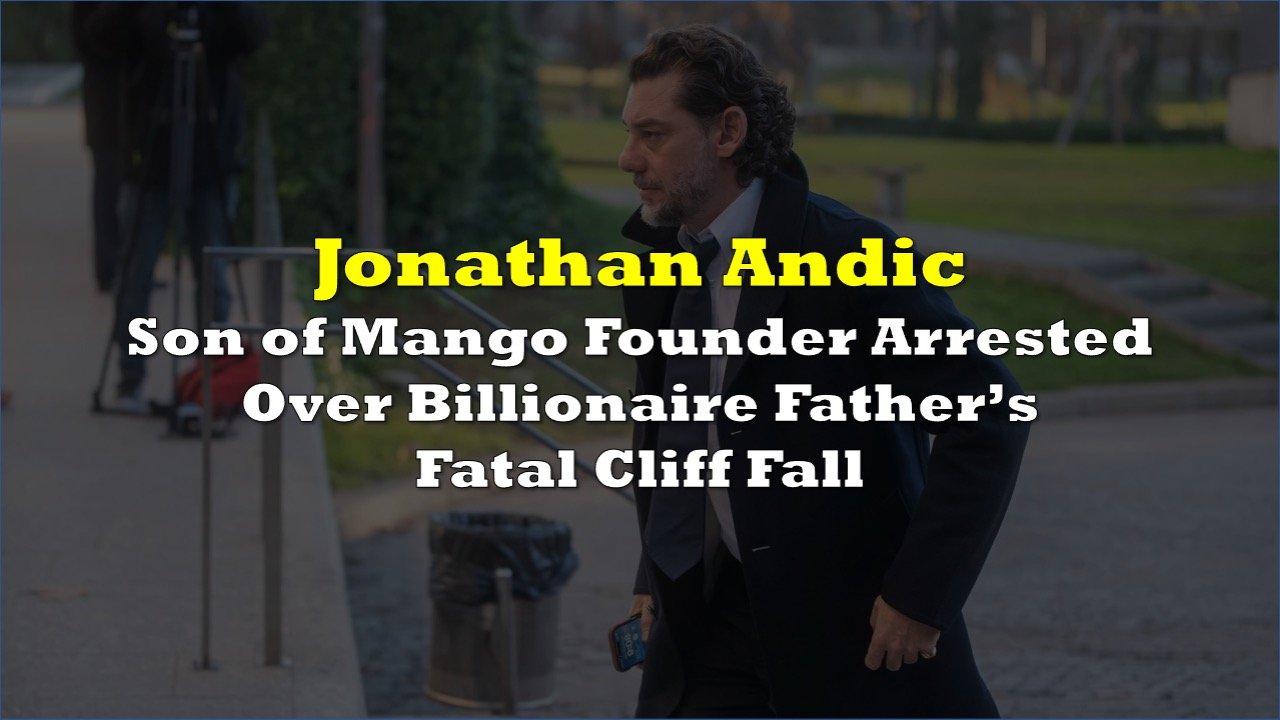
Furthermore, Jonathan Andic claimed he was walking about 4 to 5 meters ahead of his father at the time. However, the judge pointed out that, given the trail conditions, he would have had to be 8 to 9 meters away to have been completely unaware of his father’s fall. This discrepancy in distance weakens the credibility of his testimony.
Suspicion #3: Inconsistent Statements
The judge detailed several contradictory statements made by Jonathan Andic at different times.
- Changing description of the incident: He initially told the police that he turned around and saw his father tumbling down. However, when calling emergency services, he told the emergency operator that he was walking ahead and only turned back after hearing the sound of rocks, at which point he saw his father fall.
- Description of his father’s position: In various statements, his description of the distance between himself and his father was inconsistent and conflicted with the distance inferred from the scene investigation.
- Testimony about phone usage: In his statement on December 31, 2024, he alleged that his father had not used his phone since the start of the hike. While police data analysis confirmed the phone was not used, this detail was not clearly mentioned in his initial report of the incident.
Other Suspicious Actions
The investigation also revealed that on March 25, 2025, Jonathan Andic replaced his mobile phone and deleted all its content. He explained to his secretary that the phone had been stolen during a trip to Quito, Ecuador. The timing of this action, which coincided with the reopening of the investigation and renewed media attention, has raised questions about his motives. Although Jonathan’s lawyer insists that “the murder theory lacks evidence,” multiple pieces of evidence have now directed the investigation towards a meticulously planned high-society homicide.
