A Stark Outlook Revealed by New Research
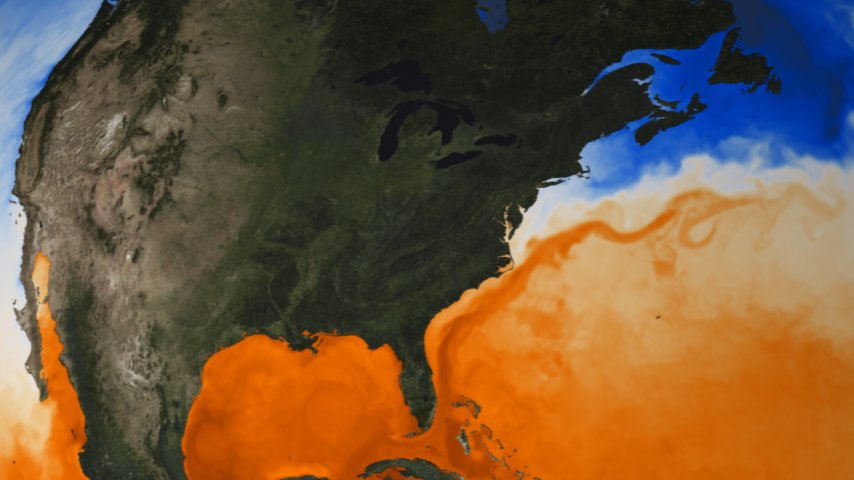
A recent study published in the prestigious journal Science Advances has sounded an alarm for the global climate system. The report indicates that the massive ocean current system known as the ‘Atlantic Meridional Overturning Circulation’ (AMOC) is weakening at a rate faster than previously anticipated. This system plays a crucial role in regulating European and global climates by transporting warm tropical water to the North Atlantic. Based on decades of observational data and climate model analysis, the study predicts that the AMOC’s strength could plummet by 42% to 58% by the end of this century. Scientists’ core concern is that the system could cross an irreversible ‘tipping point,’ which, if it occurs, would trigger drastic global climate upheaval over the coming decades to centuries.
Potential Impact on Spain: Worsening Droughts
The continued weakening of the AMOC will have varied impacts across different parts of Europe. For Northern European countries, it could mean significant cooling. However, for Southern European and Mediterranean regions, represented by Spain, it signals more severe challenges. Researchers explicitly state that a weaker circulation will lead to reduced rainfall and longer drought cycles in the region. This will directly worsen the already strained water resource situation on the Iberian Peninsula. Furthermore, this phenomenon could trigger a chain reaction, including sea-level rise in parts of the Atlantic and a reduced capacity of the ocean to absorb carbon dioxide, thereby indirectly accelerating the process of global warming.
Significant Differences in National Response Strategies
In the face of this potential crisis, the response from European nations has been uneven. Several public institutions in France have already incorporated the risk of a rapid AMOC slowdown into their climate risk scenario assessments, initiating forward-looking plans for key areas such as agricultural production, infrastructure resilience, and water resource management. In contrast, Spain’s current climate policy remains primarily focused on ‘mitigation’ measures like emissions reduction and renewable energy development. Consequently, some scientists are urging the Spanish government to simultaneously strengthen its ‘adaptation’ strategies, meaning to prepare concrete response plans for the arrival of extreme climate scenarios.
Scientific Consensus and Future Challenges
Although there are differing views within the scientific community on whether the AMOC will completely collapse within this century, the vast majority of scientists agree that its continuous weakening trend is well-supported by data. Therefore, the focus of academic attention has shifted from the question of ‘if the circulation is weakening’ to a more challenging issue: how human society should respond to a climate shift of this magnitude if the system does cross an irreversible tipping point. This requires governments, especially those of countries on the front lines of this risk like Spain, to elevate climate adaptation to the same strategic importance as emissions reduction.
