Background: Papal Visit and Massive Crowds
To welcome Pope Leo XIV for his official visit from June 6 to 9, 2026, the Madrid City Council will launch an unprecedented traffic and security operation. The main events of the visit will take place at Plaza de Cibeles and Plaza de Lima. According to estimates from the archdiocese, attendance could exceed 1.5 million people, posing a significant challenge to the city’s transport and public safety. Mayor José Luis Martínez-Almeida stated that the coming days will be “very complex,” with an organizational scale second only to the 2022 NATO Summit held in the city.
Traffic Restrictions: Schedule and Affected Areas
The traffic control plan announced by the Madrid City Council will be implemented in phases. Starting May 25, traffic restrictions will begin on some of the city center’s main arteries. As the visit approaches, the restricted area will gradually expand. By around June 4, core areas, including Paseo de la Castellana and the vicinity of Plaza de Cibeles, will be almost entirely closed to traffic to facilitate the large-scale religious events. Officials advise drivers to plan their routes in advance and use the M-30 ring road as a detour.
Official Recommendations and Public Services
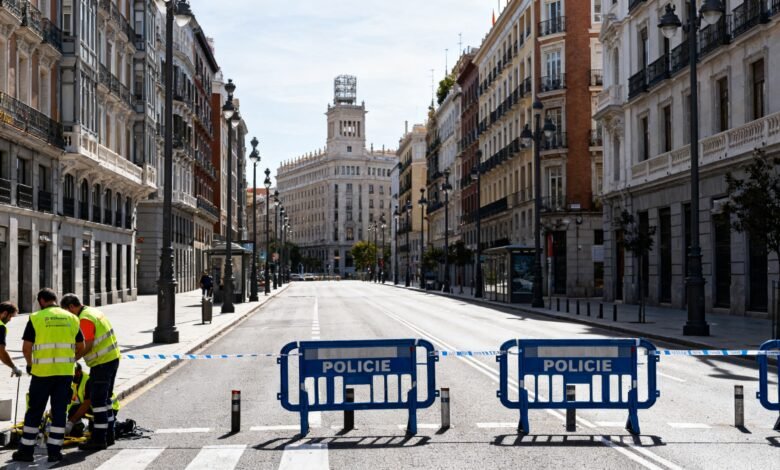
To mitigate traffic congestion, the City Council has introduced several measures. Firstly, it is urging businesses in the city to allow employees to work remotely whenever possible to reduce commuter traffic. Secondly, the city has collaborated with major navigation platforms like Google Maps and Waze to ensure real-time updates on road closures and alternative routes. As a key public service initiative, from June 3 to 9, the municipal bus service (EMT) and the public bike-sharing service (BiciMAD) will be free for all residents to encourage the use of public transportation.
Security Deployment: Police and Medical Resources
In terms of security, Madrid will invest significant resources. Approximately 4,000 National and Municipal Police officers will be deployed to maintain order, manage crowd flow, and respond to potential security threats. Additionally, around 1,000 medical and emergency personnel will be on standby to provide rapid response to any health incidents. The entire security framework aims to create a safe and orderly environment for the papal visit.
