When I first came to Spain, friends often asked why I chose Seville over the more familiar Madrid or Barcelona. Today, speaking from my own experience, I want to talk about my alma mater, the University of Seville. I hope this provides a genuine insight for students who are choosing a university or are interested in studying in the south of Spain.
Campus Impressions: More Than a University, It’s History Itself
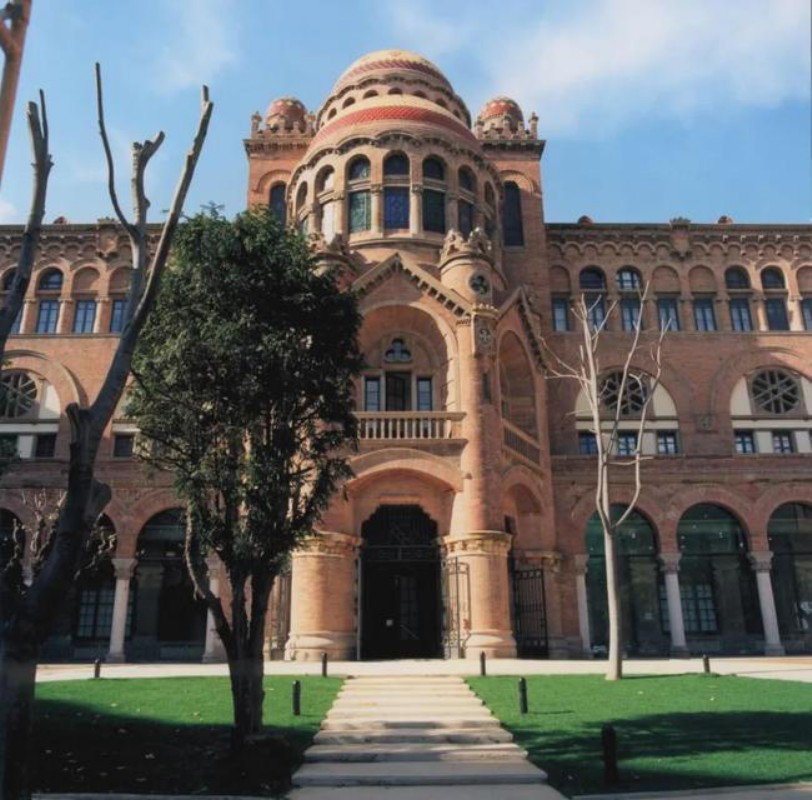
When you talk about the University of Seville, you have to mention its main campus, the ‘Old Tobacco Factory,’ which houses the humanities faculties. That’s right, it’s the setting for Bizet’s opera Carmen! I was truly stunned the first time I walked into this magnificent building. It feels less like a campus and more like a grand historical museum. Walking through its long corridors, you can almost hear the laughter of the factory women from a century ago. Attending classes here feels like stepping back in time every day—it’s a truly magical feeling. The university’s atmosphere is very liberal and open, filled with the characteristic warmth and energy of the Andalusia region.
Strong Majors and Academic Atmosphere
The University of Seville is a public university with over 500 years of history, consistently ranking high among Spanish universities, especially renowned in humanities, social sciences, and engineering. Its programs in Philology, Art History, Archaeology, Architecture, and various engineering fields are particularly strong. For students who want to master authentic Spanish, the Faculty of Philology here is a top-tier choice. I’ve compiled a list of what I consider to be some of the strongest majors and their respective faculties for your reference:
| Faculty | Recommended Majors |
|---|
| Faculty of Philology | Hispanic Studies, English Studies |
| Faculty of Geography and History | Art History, History |
| Higher Technical School of Engineering | Aerospace Engineering, Industrial Engineering |
| Faculty of Communication | Audiovisual Communication, Journalism |
Regarding applications, undergraduate admission largely depends on your converted high school grades and university entrance exam scores, and competition for popular majors is quite fierce. Master’s applications are evaluated based on a review of your documents, where your language proficiency, undergraduate GPA, and resume are key factors. Overall, the academic atmosphere is quite rigorous. Most professors are very dedicated but also place a high value on students’ independent learning skills, so coasting to graduation isn’t an easy option.
Cost of Living and City Vibe
This is definitely one of Seville’s major advantages! Compared to Madrid and Barcelona, the cost of living in Seville is very affordable. Renting a room in a shared apartment costs around €250-€350, and if you cook for yourself, a monthly grocery bill of €200 is more than enough. The city isn’t large, and getting around by foot, bus, or bicycle is very convenient. Plus, it’s sunny year-round, the locals are warm and friendly, and the pace of life is slow and relaxing. The only downside might be the summer… it gets unbelievably hot! In July and August, temperatures often soar above 40°C, a true trial by fire.
If you long for the southern Spanish sun, enjoy a relaxed pace of life, and want to study at a public university rich in history and strong in academics, then the University of Seville is definitely an option worth considering. It may not be as cosmopolitan and bustling as Madrid or Barcelona (you can read more in this introduction to the University of Seville), but it possesses a unique charm that is distinctly Andalusian. If you have any other questions about applications or practical matters like finding the University of Seville’s postal code, feel free to leave a comment below, and I’ll do my best to answer!
