Atherosclerosis is one of the world’s leading cardiovascular diseases, characterized by the gradual buildup of cholesterol in arterial walls to form plaques, which can lead to severe consequences. Recent research from Spain offers new hope in combating this challenging condition.
Targeting a Key Immune Cell: The Role of cDC1
Research from the Immunobiology group at the Spanish National Centre for Cardiovascular Research (CNIC) has revealed that an immune cell subset called ‘conventional type 1 dendritic cells’ (cDC1) plays a central role in the inflammatory process of atherosclerosis. It has long been known in the medical community that inflammation and immune responses are key drivers of the disease’s development.
The research team confirmed this finding through experiments in mouse models. The results showed that when the number of cDC1 cells in the mice was artificially increased, the severity of their arterial damage worsened. Conversely, in experimental mice lacking cDC1 cells, the formation of arterial plaques was significantly inhibited, even when they were fed an unhealthy diet. Further molecular analysis indicated that the STING molecule within cDC1 cells is crucial for their harmful effects.
Innovative Targeted Therapy: Precise Delivery with Nanoparticles
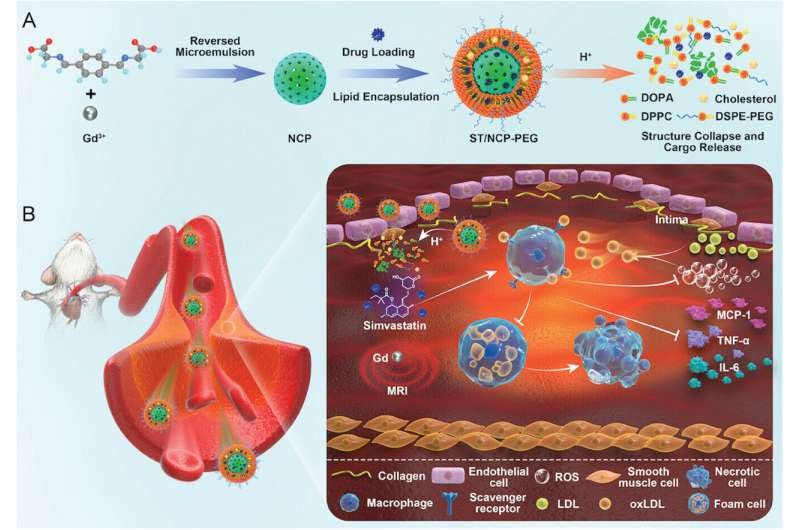
Building on a deep understanding of the cDC1 cell’s mechanism, another major innovation of this research is the development of a precision-targeted nanoparticle therapy. This experimental treatment aims to intervene in the disease process at its immunological roots.
At the core of this therapy is a specially designed nanoparticle. Its interior is loaded with the known immunosuppressive drug ‘dexamethasone,’ while its exterior is coated with specific antibodies. These antibodies can accurately identify and bind to cDC1 cells, delivering the drug precisely to the target cells for a localized therapeutic effect.
Validation in Animal Models: Significant Efficacy and Controlled Side Effects
Researchers tested this new nanotherapy in animal models with atherosclerosis. The results were encouraging: animals that received the treatment showed a significant reduction in the size of their arterial lesions and associated inflammation levels.
Crucially, this targeted strategy demonstrated a high degree of safety. It effectively controls local inflammation in the arteries without compromising other essential systemic immune functions, such as the body’s ability to fight viral infections. This advantage addresses the challenge of widespread side effects associated with traditional immunosuppressive therapies, opening up greater possibilities for clinical application.
Future Outlook: A New Direction for Cardiovascular Disease Treatment
This CNIC-led study not only solidifies the critical role of cDC1 cells in the development of atherosclerosis but also offers a highly promising new treatment strategy. By integrating molecular biology and material engineering, this therapy can precisely target the immunological roots of the disease. It holds the potential to lead to safer and more effective treatments than currently available options, marking a significant advancement in the field of cardiovascular medicine.
