Spain’s Property Market Cools: Three Months of Falling Sales Plunge Sales and Rentals into Difficulty
Official Data Confirms Market Downturn
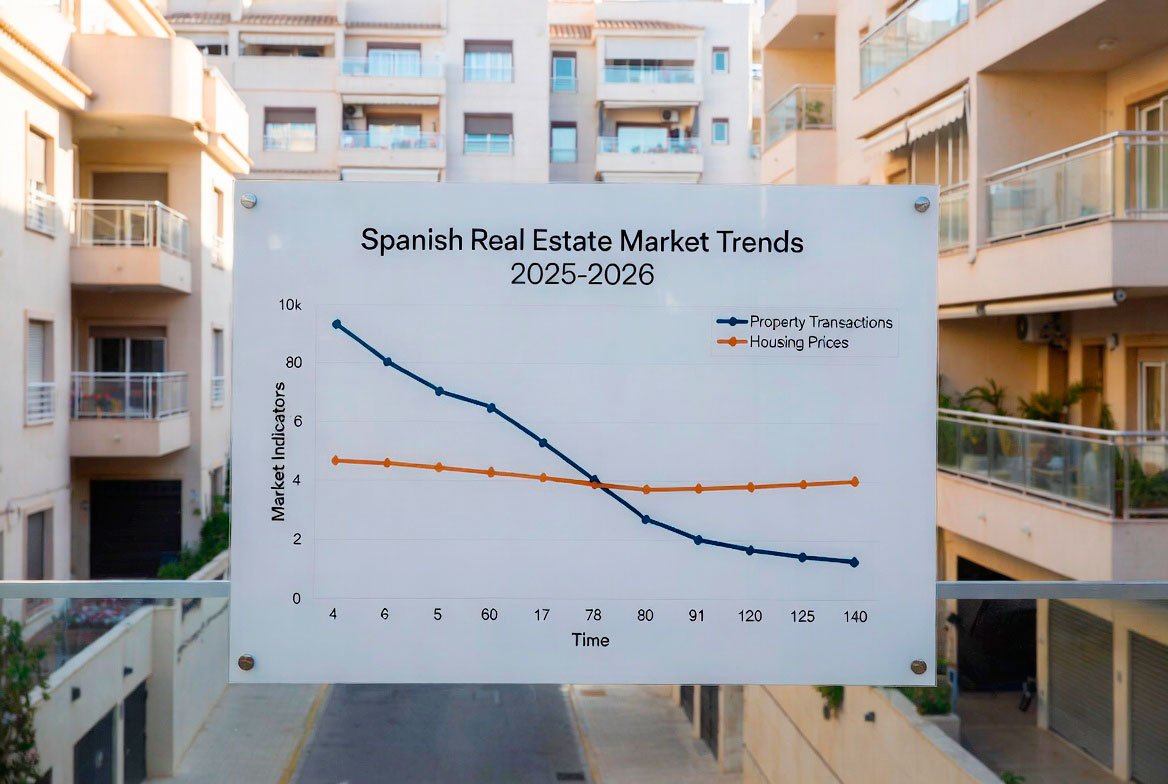
According to the latest data from Spain’s National Statistics Institute (INE), the country’s real estate market continued to cool in early 2026. In March, a total of 61,295 home sales were completed nationwide, a 2.2% decrease year-on-year. This marks the third consecutive month of declining sales volume since the beginning of the year.
Francisco Iñareta, a spokesperson for the real estate platform Idealista, suggests this continuous downward trend could signal a ‘cyclical shift’ in the market. Alternatively, it could mean that the nationwide home-buying frenzy is ‘stabilizing’ after 2025, which saw the highest transaction volume since 2007. Real estate agents in the industry widely predict that the market in 2026 will gradually retreat from last year’s peak and stabilize.
Longer Transaction Times, Agents Feel the Chill
The market cooldown is particularly palpable for frontline real estate agencies. Reports indicate that the time required to successfully sell a property is now three times longer than it was a few months ago. Since February, a general weakening of purchasing power has forced agents to advise homeowners to adjust their expectations and lower their asking prices to adapt to the changing market.
Several real estate professionals in southern Madrid revealed the difficulties in interviews. ‘A few months ago, a property would sell after an average of 10 viewings. Now, you might not find a suitable buyer even after 40 viewings,’ one said. They emphasized that the issue isn’t a change in buyers’ financial strength or profile, but rather the ‘increasingly outrageous prices’ in the market that are halting transactions.
Price Standoff: The Situation in Southern Madrid
The disconnect between price and value is starkly evident in actual transactions. One agent cited an example: at the end of 2025, in the Parla area of southern Madrid, an old 70-square-meter apartment needing renovation and without an elevator could still sell for €200,000. However, since February 2026, transactions for similar properties have come to a near complete standstill.
This stalemate reflects the huge gap between sellers’ price expectations, based on past market heat, and buyers’ ability to pay in the current high-cost environment. The intensified negotiations between buyers and sellers are making it difficult to close deals.
The Dual Dilemma: Can’t Afford to Buy, Can’t Find a Place to Rent
For the average person in Spain, the housing crisis is becoming more severe, presenting a dual dilemma where they can neither afford to buy nor find a place to rent. On one hand, prohibitive property prices and financing costs make homeownership a distant dream. On the other hand, the rental market is also sounding alarms.
A salesperson at a well-known real estate chain admitted their branch ’hasn’t successfully rented out a single property in over a year.‘ She pointed out that in major southern Madrid municipalities like Leganés, Fuenlabrada, Parla, and Getafe, available rental properties have all but vanished. This phenomenon—a cooling sales market coexisting with a depleted rental inventory—is putting unprecedented pressure on local residents’ housing situations.
