Spanish Consumers Turn to Private Labels to Combat Inflation
Recently, the leading French business newspaper Les Echos noted that Spanish consumers are adopting a pragmatic strategy to cope with the rising cost of living: increasing their purchases of supermarket private labels (known as ‘Marca Blanca’ in Spain).
Data clearly shows this growing trend. In 2019, private label products accounted for 37.7% of the Spanish shopping basket; today, that figure has climbed to 45%, meaning nearly half of all goods sold are private labels. This not only sets a new record but is also 5 percentage points higher than the European average. Analysts believe that during times of economic uncertainty, consumers tend to seek better value-for-money alternatives rather than simply cutting back on spending, which has fueled the market share growth of private labels during successive economic crises.
Policy Changes May Worsen Future Price Pressures
The rapid rise in Spanish food prices has been partly attributed to the lack of a unified price negotiation mechanism within the food industry. Although the Spanish government previously invested €5 billion in tax cuts, such as reducing energy taxes to mitigate the impact of inflation on the public, this grace period is coming to an end.
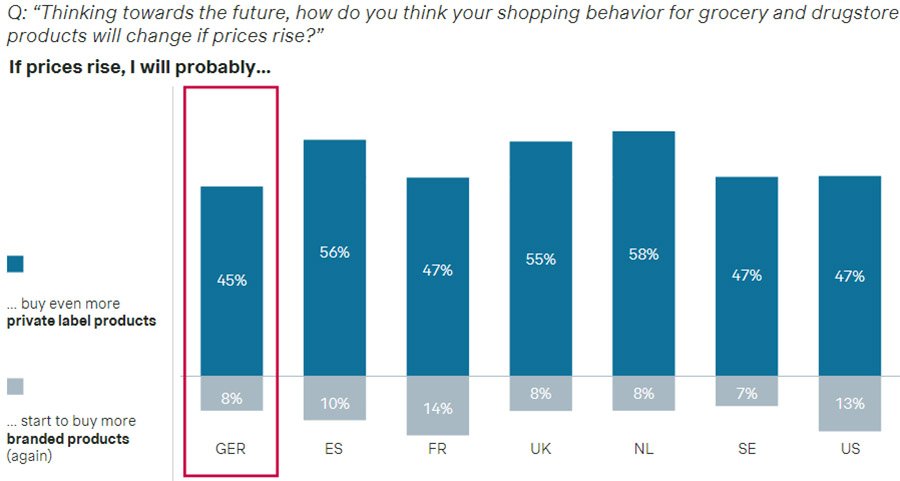
According to the government’s plan, starting this June, some tax relief measures for electricity and natural gas will be phased out, with future support targeted only at specific high-energy-consumption industries. There are market concerns that a renewed rise in energy costs will ripple through the entire supply chain, potentially triggering a new round of food price hikes and increasing financial pressure on consumers.
Mercadona’s Dominance in the Private Label Market
In this shift in consumption patterns, Spanish supermarket giant Mercadona has emerged as the biggest beneficiary and market leader.
Currently, Mercadona holds about 30% of the Spanish retail market share. Its performance in the private label sector is particularly outstanding: approximately 70% of the products on its shelves are its own brands. More critically, Mercadona’s sales account for over half of Spain’s total private label sales, with its share in this segment projected to reach 50.4%.
In contrast, its main competitors lag significantly behind. Data shows Lidl’s share of the private label market is 14.3%, while Carrefour’s is 8.2%. This commanding lead solidifies Mercadona’s “king” status in Spain’s private label sector. This phenomenon reflects a shift in Spanish consumer preference from brand loyalty to a demand for high value-for-money products in the face of economic pressure.
