Lately, I’ve seen a lot of forum posts discussing Spanish majors at Chinese universities, which reminded me of my alma mater, Huazhong University of Science and Technology (HUST). When you mention HUST, the first things that probably come to mind are its top-tier engineering programs like optoelectronics, mechanical engineering, and computer science. However, our university’s Spanish major is also quite unique—a real ‘rose among the thorns,’ so to speak. Today, as an alumnus, I’d like to share what it’s like to study Spanish at HUST, the ‘Forest University.’
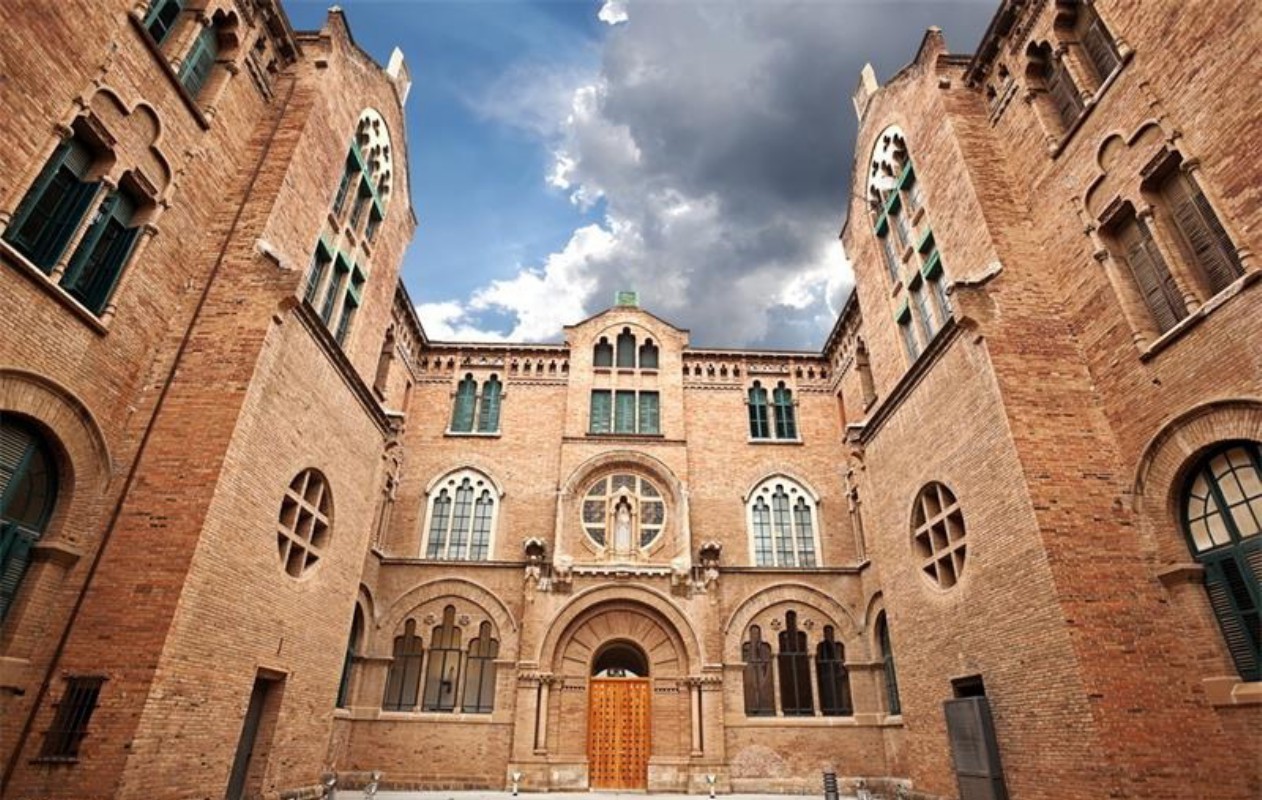
First and foremost, the environment is fantastic! HUST is nicknamed the ‘Forest University’ for its incredibly high green coverage and beautiful campus. Studying a language in such a serene setting is truly calming. Walking to class at the Foreign Languages Building—the ‘Red House’—through the paths by Yujia Mountain and under the phoenix trees is a pleasure in itself. Unlike at a purely liberal arts university, here with Spanish at Huazhong University of Science and Technology you get to interact with students from various science and engineering backgrounds. The exchange of ideas is fascinating and a unique benefit for Spanish majors at HUST.
Curriculum and Program Structure
The curriculum for our major is very solid, focusing on building strong foundational language skills and practical application. The first two years are dedicated to core courses like intensive and extensive reading, listening, and speaking to build a strong foundation in grammar and vocabulary. In the upper years, more advanced courses are introduced, such as Spanish Literature, Latin American Literature, Translation Theory and Practice, and Business Spanish. Here’s a brief list of some core courses to give you an idea:
| Course Category | Key Courses |
|---|
| Language Skills | Basic Spanish, Advanced Spanish, Spanish Audio-Visual and Speaking, Interpretation and Translation |
| Specialized Knowledge | History of Spanish Literature, Introduction to Latin American Countries, Business Spanish, Spanish for Journalism |
| Cultural Literacy | Spanish Culture, Latin American Culture, Cross-Cultural Communication |
Faculty and Learning Atmosphere
The professors are very dedicated, including both experienced Chinese faculty and native speakers from Spain and Latin American countries. The classes taught by international faculty, especially for speaking and culture, are particularly popular as they expose you to authentic expressions and ways of thinking. The program is relatively small, so students are close-knit, and the learning atmosphere is very strong. We often had Spanish corners, film appreciation nights, and cultural festivals, so there were plenty of opportunities for practice. Preparing for the DELE exam together and rehearsing for plays created unforgettable memories.
Regarding career paths, you shouldn’t worry that studying a language at a science and engineering university will be a limitation. Our graduates have diverse options. A significant number choose to pursue postgraduate studies in Spain or Latin American countries, often getting into very good schools. Many who enter the workforce directly join large tech companies like Huawei and ZTE for overseas marketing or international assignments, where the STEM-focused environment actually becomes an advantage. Others find positions in the foreign affairs office, banks, and news media. Overall, the idea of graduating into unemployment is virtually non-existent; ultimately, it all comes down to your personal skills and abilities.
I’ve shared all this mainly to provide some information for those considering a Spanish major or who are interested in HUST. Studying Spanish at HUST is a truly unique experience. If you are interested in studying in Spain as a HUST student, love language and culture, and also want to experience the academic atmosphere of a top-tier science and engineering university, then this is an excellent choice. Everyone is welcome to join the discussion!
