Valencia’s PAU Exams in Crisis: Over 250 Graders Threaten Boycott to Protest Education Policies
As the university entrance exams (PAU) approach, tensions within the education system of the Valencian Community in Spain have escalated dramatically. A committee of more than 250 university professors and high school teachers responsible for grading the exams has issued an ultimatum to the regional Department of Education, threatening a series of boycott actions that could severely impact the futures of tens of thousands of students if their demands are not met.
The Ultimatum: Three Drastic Protest Measures
With negotiations with the Department of Education at a stalemate and dissatisfaction over an agreement signed between two major unions and the government, this group of experts, who hold the power to grade the exams, has broken its silence with a three-step escalating protest plan:
- Mass Absence: All members of the grading committee will refuse to attend the formation ceremony for the PAU grading teams at various exam centers on June 2.
- Mass Resignation: If the absence fails to draw sufficient attention, all members will submit their resignations on June 2, formally refusing to participate in this year’s grading process.
- Escalated Action: If the government does not concede under this pressure, the committee does not rule out taking more disruptive and radical actions during the subsequent critical grading stages.
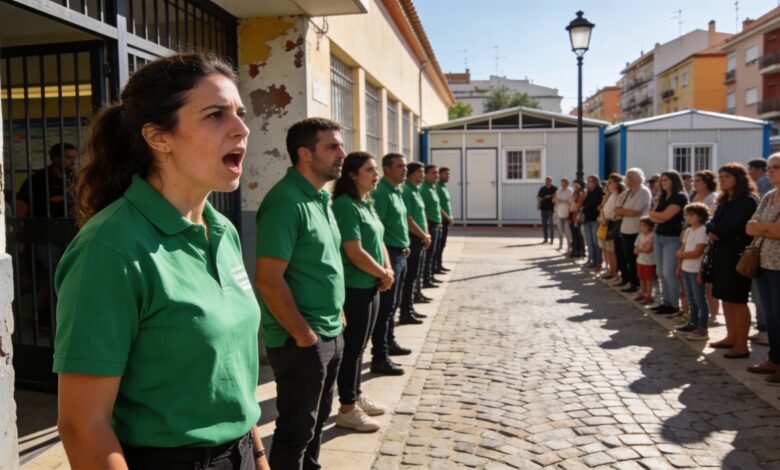
Point of Contention: Multiple Accusations Against the State of Education
The teacher group’s statement details their serious dissatisfaction with the current education system, arguing that the working conditions for frontline teachers have severely deteriorated. Their main accusations include:
- High Student-to-Teacher Ratios: Class sizes exceed official limits, and even the government’s proposed improvements fall short of reasonable standards.
- Cuts to Educational Resources: Classes for specific subjects, such as the arts, are being forcibly reduced or eliminated.
- Outdated Facilities: The physical condition of some classrooms is poor and fails to meet basic teaching needs.
- Marginalization of the Local Language: Accusations that the Department of Education’s policies neglect and marginalize the Valencian language (Valenciano) and its related courses.
- Unfair Pay: Compensation for the extra hours worked by head teachers has been cut, and their work is not being adequately remunerated.
- Heavy Administrative Burden: Frontline teachers are overwhelmed by excessive paperwork and bureaucratic procedures.
Criticism Shifts to Silent Public Universities
In addition to applying direct pressure on the Department of Education, the grading committee has also publicly criticized the five main public universities in the Valencian Community for their silence and inaction in the dispute. These five universities are:
- University of Valencia (Universitat de València, UV)
- Polytechnic University of Valencia (Universitat Politècnica de València, UPV)
- University of Alicante (Universitat d’Alacant, UA)
- Jaume I University (Universitat Jaume I, UJI)
- Miguel Hernández University of Elche (Universitat Miguel Hernández d’Elx, UMH)
The protesting teachers point out that although some faculties have privately expressed support, the university administrations have yet to issue any official statements. They have called on the universities, reminding them that these PAU students are their future student body and that the institutions have a responsibility to step up and provide institutional support to defend educational quality and the rights of teachers and students. The teacher strike, which has been ongoing for nearly two weeks, continues, and whether the exam grading crisis can be resolved in time remains uncertain.
