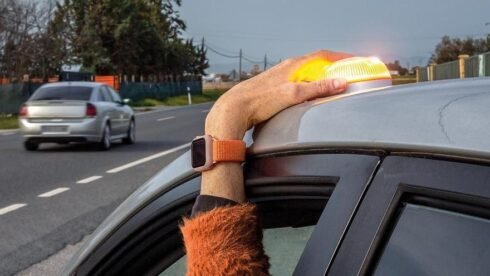
Spain’s V-16 smart connected emergency light, which will become mandatory on January 1, 2026, has faced a challenging market rollout over the past six months. Latest official figures show that approximately 15% of drivers (around 1.5 million people) have not yet purchased the device, with its high price being the main point of resistance. Despite public controversy and stagnant sales, Spain’s General Directorate of Traffic (DGT) has affirmed that the regulation, aimed at improving road safety, is non-negotiable.
DGT Responds Firmly, Launches Pre-Summer Promotion Campaign
To break the sales deadlock, DGT Director-General Pere Navarro announced on Monday the launch of a new strategic promotional campaign. The initiative aims to significantly boost the adoption rate of the V-16 emergency light before the upcoming ‘summer exodus’. The DGT emphasized the device’s practical benefits, pointing out that the GPS-enabled warning light is activated an average of 2,500 times daily on the national road network. Furthermore, officials have received numerous letters of gratitude from drivers with mobility issues, who appreciate that the new device allows them to avoid the dangerous task of exiting their vehicle to place traditional warning triangles, thereby eliminating a critical safety risk.
Official Clarification on Technical and Privacy Concerns
In response to online concerns regarding privacy and the lifespan of the V-16 emergency light, Director Navarro provided a direct technical clarification at a hearing in the Congress of Deputies. He stated that the device’s lifespan is not unlimited, with a core operational period of about 11 to 12 years. This is directly linked to the legally mandated service period of the internally soldered IoT SIM card. This industrial-grade SIM card cannot be removed without destroying the device’s casing, and its operation is strictly regulated by national authorities and European safety standards.
Technically, the device utilizes low-power NB-IoT (Narrowband Internet of Things) technology. It only transmits a few kilobytes of precise location data to the traffic authority’s private cloud network when activated during an emergency, such as an accident. The system is designed to be incapable of connecting to the public internet, and carriers have technically locked its data traffic to prevent any potential misuse.
Legal Challenges and EU Ruling
Despite legal challenges brought by some Spanish political parties to the EU headquarters in Brussels, alleging issues such as a potential monopoly, the efforts were unsuccessful. The European Commission has officially ruled that Spain holds absolute sovereignty and discretion over its national road safety regulations. This decision has cleared the primary legal hurdles, allowing the DGT to proceed with the rollout of the V-16 emergency light.
