14 Hospitals Join Forces, Healthcare System Faces New Pressure
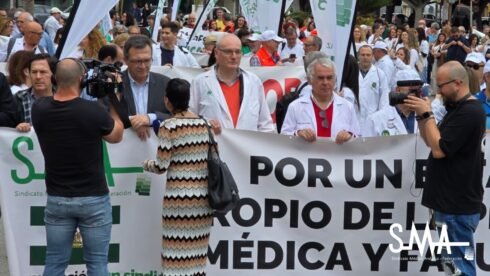
According to late May 2026 reports, the public healthcare system in the Community of Madrid is facing a severe new challenge. The protest, initially started by the Anesthesiology and Resuscitation Department at Hospital 12 de Octubre, has quickly spread, with 14 major public hospitals including Gregorio Marañón, La Paz, Clínico San Carlos, Puerta de Hierro, and Ramón y Cajal joining in. Starting June 1, 2026, doctors at these hospitals will indefinitely suspend what are known as “peonadas”—extra overtime surgeries.
In their statement, the doctors noted their decision to take this action was due to “a lack of any real will to negotiate” from both the regional government and the health department. This move means that, apart from organ transplants and essential emergency services, a large number of non-urgent surgeries may be rescheduled or postponed indefinitely. The protesting doctors emphasize that the normal functioning of Spain’s public hospitals has long relied on the excessive overtime of medical staff, while corresponding institutional guarantees and financial compensation have failed to materialize.
Core Demands: A 35-Hour Workweek and Fair Compensation
The core demands of this protest are clear and specific, focusing primarily on improving basic working conditions. The doctors are demanding:
- Reduced Working Hours: To shorten the standard workweek from the current 37.5 hours to 35 hours. They point out that most of Spain’s autonomous communities have already implemented a 35-hour workweek, and Madrid’s lag on this issue constitutes “unequal treatment.”
- Increased Pay: A demand for higher compensation for 24-hour on-call shifts and an increase in base salaries to match their high-intensity work.
- Systemic Reforms: A push to make 24-hour on-call shifts voluntary, reduce the proportion of temporary contracts, and improve work-life balance.
To ensure their demands are met, the doctors have called for the Community of Madrid’s government to form an official strike committee and establish a clear timeline for reforms with quarterly monitoring. They cite a similar agreement previously reached with doctors in the autonomous community of Galicia as proof that such reforms are feasible.
Labor-Management Standoff and Government Response
In response to the escalating protests from medical groups, the government of the Community of Madrid has shifted responsibility to Spain’s central government. The regional health department stated that key issues like improving doctors’ base salaries and providing financial support should be uniformly addressed at the national level by the Ministry of Health, led by Mónica García, within the framework of the Medical Staff Statute.
This labor dispute has been ongoing for some time. Data shows that since December 2025, doctors in Madrid have organized 25 rounds of strikes, leading to the cancellation or postponement of over 215,000 appointments, more than 10,000 surgeries, and over 20,000 medical tests, with direct economic losses exceeding 16.45 million euros. This latest action to halt overtime surgeries will undoubtedly place even greater strain on the already tense doctor-patient relationship and the healthcare system.
