Historic Discharge and Record Water Levels
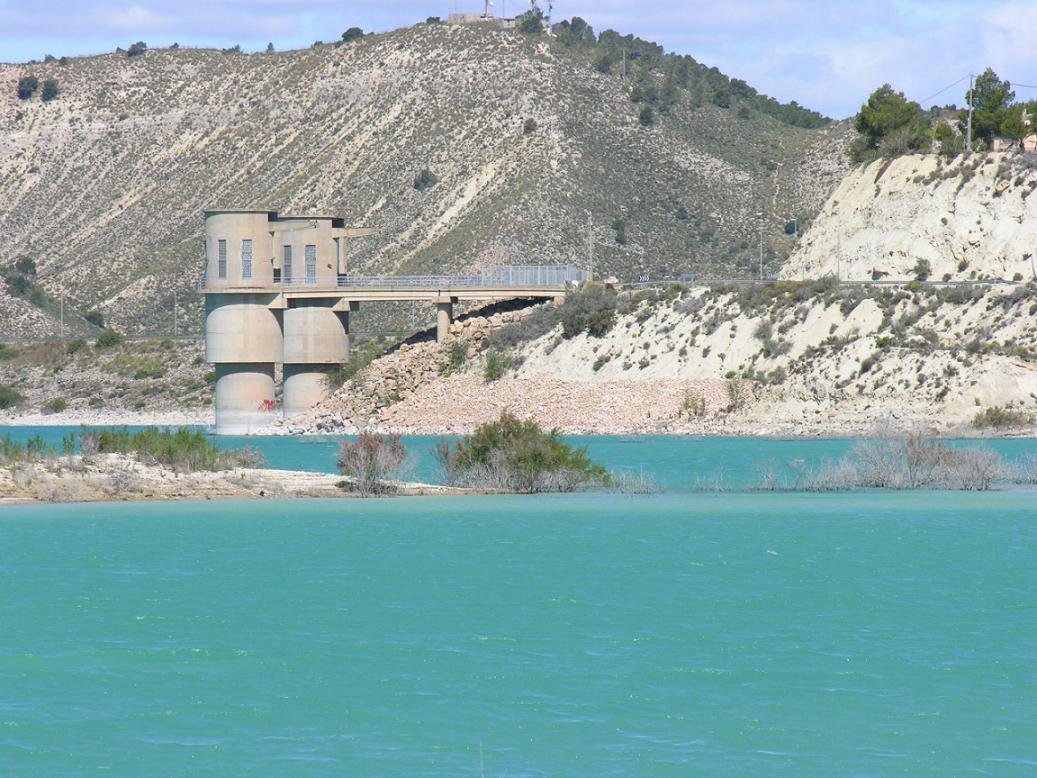
In May 2024, the Madrid region witnessed a hydrological milestone. The El Atazar reservoir, located on the Lozoya River (río Lozoya), released water through its upper spillways for the third time in its 52-year history and the first time since May 1991. The two previous discharges occurred in July 1988 and May 1991.
Behind this rare event are unprecedented water levels in Madrid’s reservoir system. According to data from the managing entity, Canal de Isabel II, the total volume in the 13 reservoirs under its management has reached 917 cubic hectometers, breaking the record set in May 1996. Currently, the El Atazar reservoir holds 372 cubic hectometers, reaching 87.39% of its capacity, significantly above the average for the last decade.
El Atazar Reservoir: Madrid’s “Source of Life”
El Atazar is the heart of Madrid’s water supply system, with a total capacity of 425.3 cubic hectometers, accounting for 46% of the region’s total water reserves. This double-curvature arch dam, operational since 1972, stands over 120 meters high with a crest length of nearly 500 meters, making it a masterpiece of Spanish engineering. The dam is equipped with one of the most advanced safety monitoring systems in the country, collecting over 250,000 data sets annually to monitor the structure’s condition in real-time.
The reservoir is fed by the Lozoya River, whose water is renowned for its low mineral content and high purity. This not only ensures a high-quality drinking water source but also effectively reduces subsequent water treatment costs.
Water Supply Security and New Management Challenges
A capacity level of 87% provides a strong guarantee for the long-term water needs of Madrid’s more than 6.5 million residents. At the same time, the steady discharge ensures an adequate ecological flow downstream in the Lozoya River, which is crucial for maintaining local wildlife habitats and riverside vegetation. Currently, Canal de Isabel II is conducting a controlled release at a rate of 3 cubic meters per second, creating a spectacular waterfall as the water cascades from a height of over one hundred meters.
However, operating near full capacity also presents new challenges. Under normal conditions, the reservoir serves a flood control function by mitigating peak flows. But when the water level is saturated, its ability to buffer against flooding from heavy rainfall is reduced. Consequently, the technical team must remain highly vigilant to weather forecasts and conduct preemptive operational adjustments.
Fine-Tuned Operations to Manage High Water Levels
To manage the persistently high water levels, the technical team at Canal de Isabel II has performed approximately 250 gate maneuvering operations across various dams since March 2024. By coordinating the water levels among different reservoirs, they systematically release surplus water while ensuring downstream safety.
Water released from the El Atazar spillway flows into the Lozoya River. A portion of this water is captured and utilized by smaller downstream reservoirs, while the remainder eventually joins the Tagus River (Tajo) basin, becoming part of the larger water cycle.
