‘Heat Dome’ Brings an Early Taste of Summer Scorch
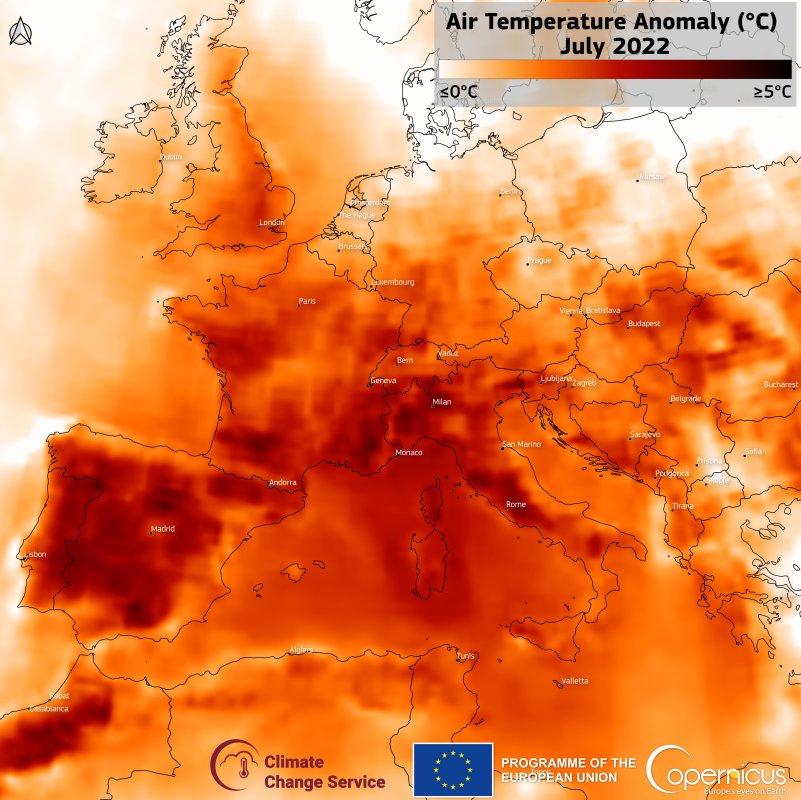
Recently, Europe has been experiencing widespread, abnormally high temperatures, with Spain being particularly affected. Meteorologists attribute this heatwave to a high-pressure system originating from North Africa and extending to the British Isles, commonly known as a ‘Heat Dome.’ This system acts like a massive lid, trapping hot air over Western Europe, preventing the entry of cooler air and the dispersal of heat. As the trapped air sinks, it is further compressed and heated, resulting in sustained, intense heat.
Since May 19, temperatures across Spain have been steadily climbing. Compared to the same period in previous years, temperatures in many regions are 12 to 16 degrees Celsius higher, bringing the typical high heat of July and August to what should be late spring.
Multiple Locations Shatter Historic Temperature Records
Data from Spain’s State Meteorological Agency (AEMET) shows that this heatwave has set new historical records in several regions. For instance, at Santander Airport in the north, temperatures exceeding 30°C before June have been extremely rare, occurring only twice since records began in 1954; this year, it has already happened six times. Similarly, Badajoz Airport, with 71 years of observation history, recorded a temperature above 38°C in May for the first time ever.
The hardest-hit areas are concentrated in Spain’s southwestern regions, such as Andalusia, including cities like Seville, Córdoba, and Jaén, as well as Toledo in the central part and Zaragoza in the northeast. Daily high temperatures in these areas have consistently remained between 37 and 39°C for several days, with some places nearing the 40°C mark. Notably, even traditionally cooler northern regions like Bilbao and Cantabria have experienced temperatures far above their normal levels.
Rise in ‘Tropical Nights’ Sparks Health Concerns
Accompanying the daytime scorch is an increase in ‘Tropical Nights,’ where the nighttime minimum temperature does not fall below 20°C. Weather services predict that cities like Seville, Cádiz, and Barcelona will face several consecutive hot nights.
Health experts warn that persistently high nighttime temperatures prevent the body from cooling down and recovering, leading to an accumulation of heat stress. This poses a serious health threat to the elderly, children, and individuals with chronic conditions such as cardiovascular disease. Continuous heat not only disrupts sleep quality but also increases the physiological burden on the body.
Extreme Weather in the Context of Global Warming
This heatwave is not confined to Spain; its effects have spread to several other European countries. Multiple regions in France have issued orange high-temperature alerts and have reported fatalities related to physical activity in the heat. London, UK, and various cities in Italy have also recorded unseasonably high temperatures for May.
Climate experts generally agree that while spring heatwaves are not unprecedented, their frequency, intensity, scope, and duration have increased significantly in recent years. Studies indicate that in the context of global warming, the probability of summer heatwaves in Europe is now about ten times higher than in the pre-industrial era, and these extreme heat events are progressively appearing earlier, shifting from summer into spring.
