Recently, Javi, a veteran owner from Guadalajara, Spain, with over half a century in the restaurant industry, detailed the current struggles facing the sector in a recent interview. His points on high costs, heavy taxes, and excessive working hours have drawn widespread attention.
The Stark Reality of Labor Costs: A Huge Gap Between Salary and Expense
Javi points out that personnel costs are the primary burden on restaurateurs. He revealed that while a waiter’s net monthly take-home pay is typically between €1,200 and €1,500, the actual total cost for the employer is close to €3,000. This difference is mainly composed of the social security contributions and taxes the owner pays for the employee.
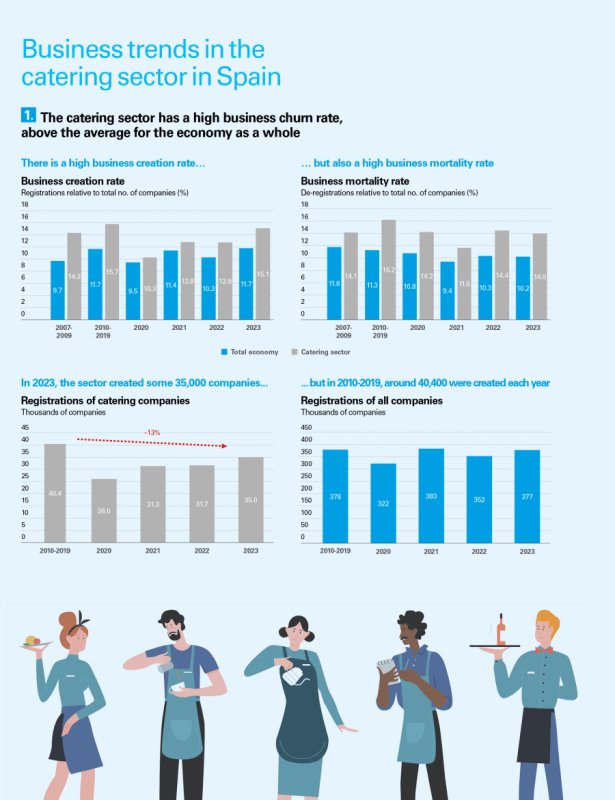
These high labor costs have directly led to an industry-wide labor shortage. Javi recalls that before the 2008 financial crisis, he employed as many as 10 people. Now, due to the hard work and declining appeal of the industry, he states, “nobody wants to work in hospitality anymore.”
Overwhelming Workload: 15-Hour Days Are the Norm
Beyond the financial pressure, immense physical exertion is also standard. Javi says the legally mandated 8-hour workday is almost impossible to achieve in the restaurant business. His typical day runs from 6 a.m. to 1 a.m. the next morning, a workday of at least 15 hours, with only one day off per week. During special events like football matches, his work hours can extend to 20 hours, with closing time depending entirely on whether the game goes into extra time.
Multiple Operating Expenses: Hidden Costs from Startup to Terrace
Javi also listed several other key operating costs:
- Startup Capital: Even when taking over an existing, fully equipped establishment, he invested €40,000 in renovations. For a new business starting from scratch, startup capital is typically around €20,000.
- Terrace Tax (Tasa de Terraza): For many bars and restaurants, the terrace is a significant source of income, but its use comes at a high price. Citing a previous bar he ran in the city’s main square, the terrace fee alone was €3,000 paid to the city council every six months, totaling €6,000 annually. He states frankly, “This is precisely why many restaurants charge extra for terrace service.”
Past and Present: Persevering Through Crises
Javi’s career has weathered the impacts of the 2008 financial crisis and the 2020 COVID-19 pandemic. He mentioned that during the pandemic lockdowns, his business “was on the brink of bankruptcy.” Furthermore, the government aid he received at the time was later required to be repaid with interest, adding to his financial burden. Despite the multiple pressures of taxes, expenses, and long hours, the veteran restaurateur says that his passion for the profession is the only reason he continues to persevere behind the stove and counter today.
