Market Shows Cooling Signs: Prices Drop in Nearly Half of Provincial Capitals
Since 2014, Spain’s real estate market has been accustomed to a trend of continuous growth. However, the latest market data reveals a significant shift. According to the April report from real estate platform pisos.com, nearly half of Spain’s 50 provincial capitals experienced a year-on-year decrease in housing prices. Although the national average price still rose by 3.24% year-on-year to €2,442 per square meter, the rate of growth has slowed significantly. This phenomenon indicates that market divergence is intensifying, with some regions already beginning to see price adjustments.
Declines Concentrated in Inland Areas, with a Surprise Drop in Valencia
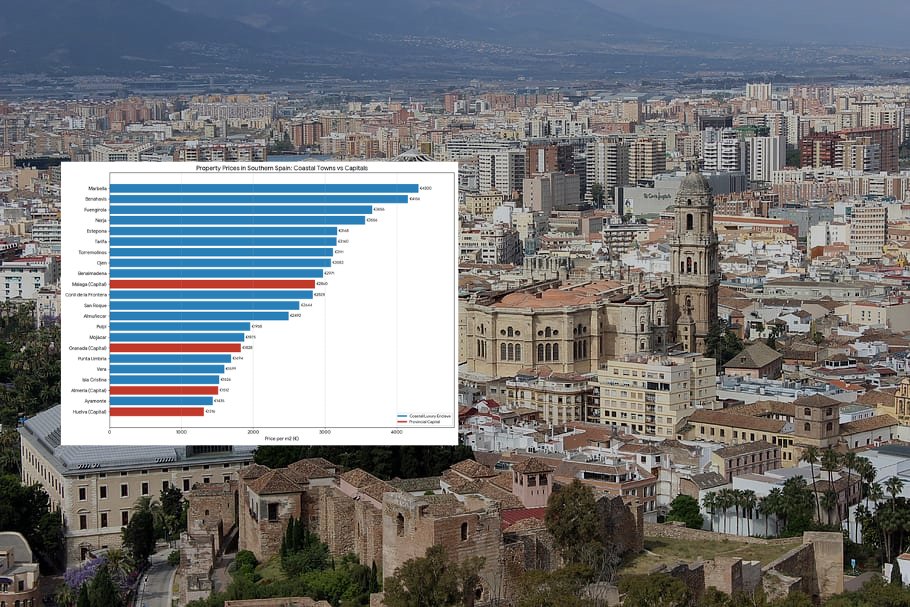
The price drops are mainly concentrated in small to medium-sized cities in Spain’s interior and northern regions. Among them, the northern city of Valladolid saw the largest decline, with prices falling 12% year-on-year. Other cities experiencing significant drops include Tenerife (-7%), Zamora (-6%), Almería (-5.9%), Soria (-5.6%), and León (-4.6%).
Particularly noteworthy is the 1.33% year-on-year price drop in Valencia, the nation’s third-largest city. As a city often compared to Madrid and Barcelona in terms of population, economy, and development potential, Valencia’s price decline is seen by market observers as a significant signal, potentially indicating a deeper shift in market sentiment and fundamentals.
Declining Sales Volume & Expert Forecasts: Market May Be Entering an Adjustment Period
The regional price drops align with the recent cooling trend in transaction activity. Data from the Spanish National Statistics Institute (INE) shows that national home sales fell by 2.6% in the first quarter of this year. Meanwhile, a study by another real estate platform, Idealista, noted that 14% of properties for sale had their prices reduced in the first quarter, up from 11% in the same period last year, reflecting that sellers are adjusting their expectations to a changing market.
Analysts believe that tighter lending conditions, the rebound of the Euribor (Euro Interbank Offered Rate), and prices reaching the affordability ceiling for many households are the main reasons for potential buyers exiting the market and the subsequent cooling. A report from Oxford Economics also pointed out that market expectations and speculative sentiment have been significant drivers of price increases in recent years. The institution forecasts that Spain’s house price growth will slow significantly in the coming years. If market participants’ expectations of continuous rises reverse, it could accelerate price adjustments.
Growing Market Divergence: Some Core Cities Remain Resilient
Although the cooling signs are clear, this does not mean the Spanish property market has entered a full-scale downturn. The market is showing significant geographical disparity. While prices are falling in some cities, other major urban centers continue to grow. For example, the capital, Madrid, still recorded a 4% year-on-year price increase in April, and prices in cities like Barcelona, Palma, Pamplona, and Vitoria also continued to rise.
Overall, the current market shift appears to be more of a normalization after a period of overheating rather than the beginning of a systemic decline. The April data serves as an important early indicator, suggesting that demand is hitting an affordability ceiling. The future trajectory of the Spanish real estate market will depend more on regional economic fundamentals, population flows, and changes in the credit environment.
