Unlocking Spanish University Major Salaries: Official Data Reveals the Path to High Earnings
According to the latest statistics from Spain’s Ministry of Science, Innovation and Universities, an analysis of graduate income levels four years after graduation reveals significant salary differences across academic fields, providing crucial data for students choosing their majors.
Salary Showdown by Field: Engineering and Health Sciences Lead the Pack
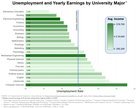
From a broader perspective, STEM and Health Sciences demonstrate strong earning power. Data shows that graduates in Architecture and Engineering have an average annual salary of €35,673 four years after graduation, ranking first among all major fields. Health Sciences follow closely with an average annual salary of €35,664, a negligible difference. In contrast, graduates in Arts and Humanities have a lower average annual salary of €28,655.
Top Major Analysis: Medicine’s “High Return, High Barrier”
In the specific major rankings, Medicine continues to lead, with graduates earning an average annual salary of a staggering €44,153 four years after graduation and an employment rate exceeding 90%, making it a true high-return major. However, this high return comes with an extremely high barrier to entry. Data indicates that the average admission score for Medicine in Spanish universities is expected to reach 12.75 (out of 14) by 2025, making it one of the most competitive majors nationwide.
The Popular “Dark Horse”: The Value Proposition of Computer Engineering
Against the backdrop of AI and digital transformation, Computer Engineering has emerged as another high-earning choice. Graduates in this field also see their average annual salary surpass the €40,000 mark four years after graduation, with an employment rate over 90%. Compared to Medicine, the admission threshold for Computer Engineering is more accessible, with an average admission score of around 8.52. This makes it a “high-value” major for many students and parents, balancing high earning potential with reasonable admission difficulty.
A New Approach to Choosing Majors: Spotting “Hidden” High-Paying Majors with Low Barriers
A key finding in the report is that high salaries do not always correlate with high admission scores. Data shows that for some majors with admission scores below 6, graduates can still earn annual salaries exceeding €30,000, and even reaching €35,000, four years later. These majors include Agricultural and Rural Engineering, Food Engineering, English Studies, and some humanities disciplines. This suggests that when choosing a major, students should not rely solely on admission scores but should conduct a comprehensive assessment, giving more weight to job prospects and long-term income potential.
