Nationwide Mobilization Looms as Protests Erupt Across Regions
The Independent and Officials’ Union (CSIF) has issued a stark warning, planning a large-scale mobilization across Spain starting this September due to extreme dissatisfaction with the long-term “abandonment” and lack of resources in the current public education system. Mario Gutiérrez, the national head of education for the union, stated that a general nationwide strike will be “inevitable” if the situation is not resolved. He emphasized that teachers can no longer guarantee high-quality instruction in an environment lacking sufficient material and human support, a challenge that has “surpassed their personal limits.”
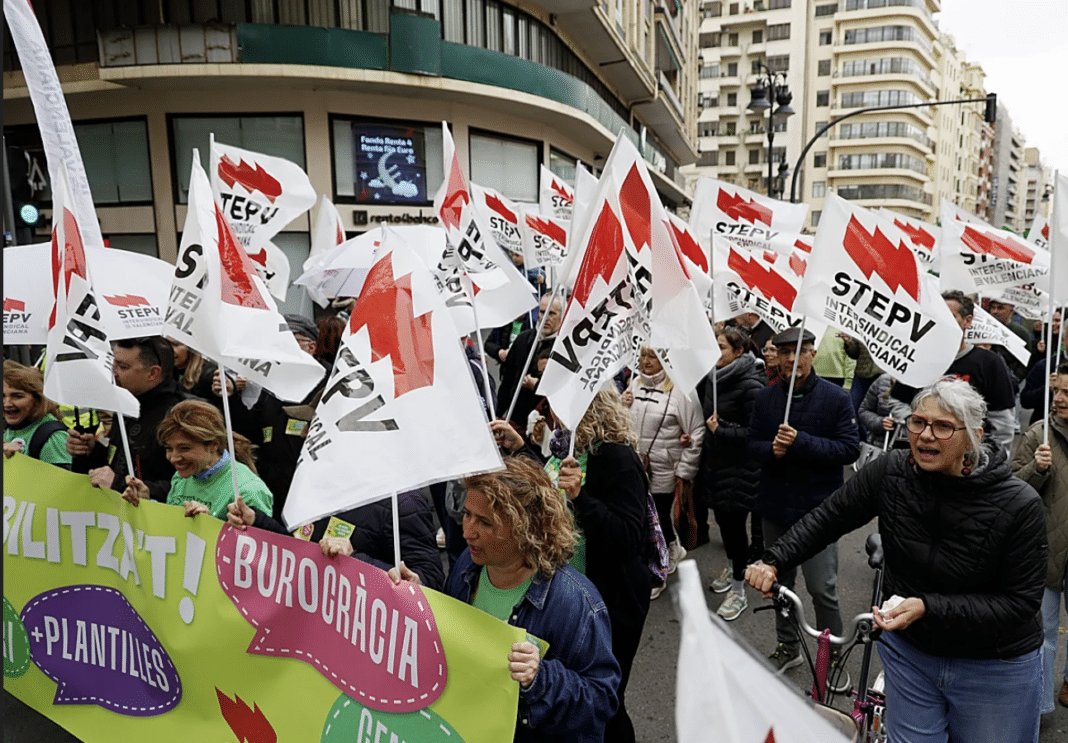
In fact, protests within the education sector have already begun in several regions. Teachers in the Valencian Community, Aragon, and Catalonia have already held several days of demonstrations. Meanwhile, two of Spain’s largest unions, CCOO (Workers’ Commissions) and UGT (General Union of Workers), have also announced plans for an indefinite strike in the Community of Madrid starting in September, further escalating labor tensions in the education field.
Teacher Shortages and Unequal Resources: The Deepening Crisis in Public Education
Behind the strike threat lies a deep-seated crisis that has been accumulating in Spain’s public education system for years. The union highlights several systemic issues: Firstly, a severe lack of education funding, with significant disparities in per-student spending among the autonomous communities, exacerbating educational inequality. Secondly, student-teacher ratios are too high, compromising the quality of teaching. Furthermore, the teaching workforce faces instability, with a high proportion of temporary staff (nearly 30%). Many teachers receive meager salaries while grappling with a heavy administrative burden, leading to widespread burnout.
Surging Special Education Needs Met with Critically Inadequate Support
The extreme scarcity of special education resources in public schools has become a key trigger for the current crisis. Data shows that since 2011, the total number of students requiring special educational support in Spain has tripled, now accounting for 17% of the total public school student body. The number of students with Autism Spectrum Disorder (ASD) has seen a particularly staggering increase, skyrocketing from 19,023 in the 2011-2012 academic year to 107,999 in 2024-2025, a nearly six-fold increase over 14 years.
Despite this surge in demand, there is a massive shortage of specialized professionals in schools, including educational psychologists, therapists, hearing and language specialists, and counselors. The union angrily denounces this as the most “serious and neglected ‘hidden deficit’” in the Spanish education system, severely impacting the educational rights of students with special needs.
Union Demands and Government Response
To address these issues, the union has presented clear reform demands to the government. Key demands include progressively increasing national education spending to 7% of the Gross Domestic Product (GDP), establishing a minimum public expenditure of €7,421 per student, and creating a nationally unified university entrance exam. Additionally, the union harshly criticizes the “uncontrolled” use of special EU funds, arguing that the money has been spent on superficial digitization projects rather than on fundamental issues like improving teacher conditions and promoting educational equity.
However, the central government’s response to the teachers’ anger has been criticized as “passing the buck.” Government official Milagros Tolón stated at a press conference that the specific management of education lies with the autonomous communities. She noted that the central government has already allocated the funds, and it is up to the regional governments to handle implementation and management. This statement is seen as completely shifting responsibility to the regions, adding fuel to the fire for the impending September strikes.
