Seasonal High-Temperature Alert: Widespread Warming Across the Country
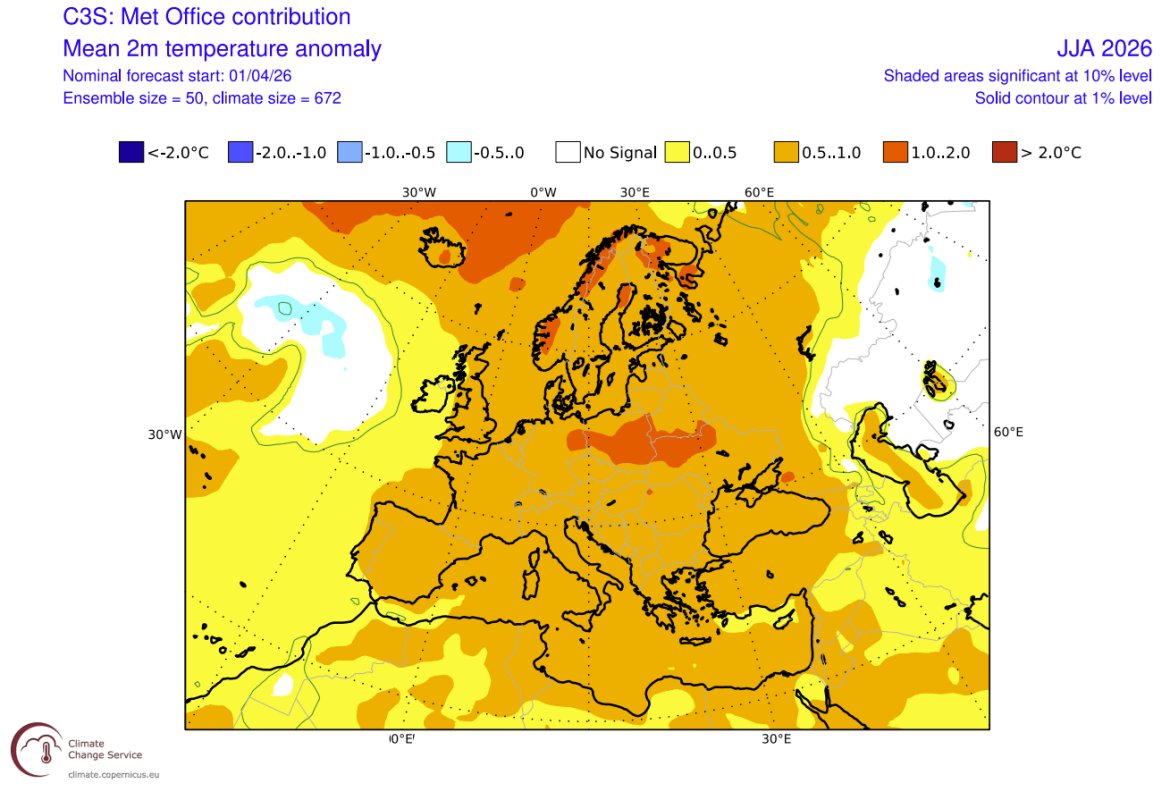
According to the latest seasonal forecast model from the European Centre for Medium-Range Weather Forecasts (ECMWF), Spain is expected to experience an unusually hot summer in 2026. Data shows that from July to September, temperatures in most parts of the country are projected to exceed historical averages for the period. The heat anomalies may be particularly pronounced in the northern peninsula and inland areas, with temperature increases potentially higher than the national average. Meteorologists point out that while this doesn’t mean every day of the summer will be scorching, the overall trend indicates a significant increase in the frequency of persistent heatwaves and extreme high-temperature events.
Frequent ‘Tropical Nights’: Worsening Heat and Sleep Challenges
A notable feature this summer will be the increase in ‘tropical nights’ (Noches Tropicales), where the minimum nighttime temperature does not fall below 20°C. After the intense daytime heat, nighttime temperatures will struggle to drop to comfortable levels, leading to stuffy, sleepless nights for residents in many areas. This sustained day-and-night high-temperature environment will not only affect people’s quality of rest but also pose a potential health threat, requiring the public to prepare for heat relief in advance.
Mediterranean ‘Fever’: Beware of Strong Late-Summer Storms
In addition to land temperatures, changes in sea temperature also warrant attention. Forecasts indicate that the surface water temperature of the Mediterranean Sea around the Spanish coast and the Balearic Islands will be 0.5°C to 1°C higher than normal. This elevated sea temperature will, on one hand, intensify the muggy feeling at night in coastal areas, and on the other, accumulate a large amount of energy for strong convective weather. Meteorological models show that if cold air moves south and meets the unusually warm ocean surface in late summer or early autumn, the risk of strong storms, heavy rain, and even floods in Spain’s eastern coastal regions and the Balearic Islands will increase significantly.
Precipitation Patterns: Generally Dry with Local Thunderstorms
Regarding precipitation, Spain will likely maintain its typical dry climate pattern in the summer of 2026. However, the forecast also points to some regional differences. Precipitation in the eastern peninsula, the Balearic Islands, and the Canary Islands may be slightly above the long-term average. This could manifest as an increase in local thunderstorm activity. Overall, the weather in Spain this summer will be characterized as ‘dominated by high temperatures with localized rain.’ The public needs to cope with the sustained heat while staying updated on weather forecasts to guard against potential extreme weather events in late summer.
