Pope’s First Visit to Spain in 14 Years Met with High-Profile Official Reception
On June 6, 2026, the new Pontiff, Pope Leo XIV (León XIV), arrived in Madrid, beginning his visit to Spain—the first papal visit to the country in 14 years. He was given a high-profile reception, with the King and Queen personally greeting him at the airport and genuflecting as per protocol. Additionally, despite the current Spanish government’s active push towards secularization, Prime Minister Sánchez also extended a formal welcome at the airport.
The “Digital Missionaries” Project: 500 Influencers Reshaping Communication
This papal visit marks a radical departure from past communication strategies, centered around a large-scale ‘influencer outreach program’ launched by the Spanish Catholic Church. Organized by the Spanish Episcopal Conference (Conferencia Episcopal Española) and the Archdiocese of Madrid on the “Con el Papa” (With the Pope) platform, the initiative systematically involves over 500 Catholic influencers and new media content creators.
These influencers, dubbed “digital missionaries” (misioneros digitales), are active on social media platforms like TikTok, Instagram, and YouTube. Their main tasks include:
- Real-Time Content Creation: Live-streaming and producing short videos of events such as the Pope’s airport arrival and motorcade procession, using unified hashtags to amplify online reach.
- Youth-Oriented Messaging: ‘Translating’ traditional and complex religious doctrines into social media-friendly language that is easy for young people to understand and embrace, packaging faith-based messages with personal stories, lifestyle content, and trendy editing styles.
To facilitate the project, organizers granted these influencers special access for interviews at select events and provided them with dedicated media stands to ensure they had optimal filming angles and perspectives.
Pop Culture and Viral Spread: From the “Six-Seven” Gesture to Celebrity Endorsements
To broaden its influence among young people, the event deliberately incorporated numerous elements of pop culture. During his motorcade tour in Madrid, Pope Leo XIV himself made a “six-seven” hand gesture familiar to young people. The gesture quickly sparked imitation and discussion on platforms like TikTok, becoming a successful viral marketing moment.
Meanwhile, organizers in Madrid also invited several celebrities from the entertainment and sports worlds to participate in related events and promotions, including Antonio Banderas, David Bustamante, and Carolina Marín. At a large diocesan event held at the Bernabéu Stadium, popular artists such as Íñigo Quintero and Diana Navarro were scheduled to perform, leveraging the appeal of popular music to reach a broader youth audience.
Countering Secularization: The Digital Transformation of the Church’s Communication Strategy
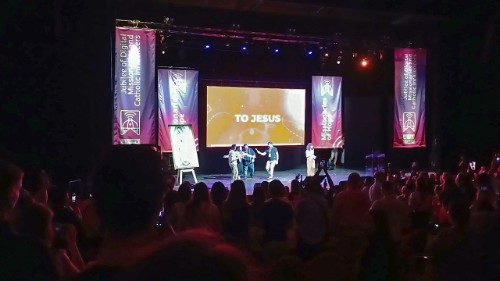
The Spanish Church’s adoption of this new communication strategy is driven by the reality of increasing secularization in Spanish society and a steady decline in religious participation among young people. While the traditional Catholic Church is deeply rooted in Spain, it has recently faced severe challenges, including an aging congregation and the disengagement of younger generations. Economic pressures have also made it more costly for ordinary people to invest time and money in religious activities.
Faced with the waning influence of traditional channels like parishes, church schools, and print media, the Church has chosen to embrace social media as its new ‘public square’ and missionary front line. As early as 2025, Spanish media outlets had already reported on this trend with headlines like “Digital Missionaries Take Over Communications.” This papal visit’s communication approach is seen as a pivotal strategic shift by the Church to reverse its decline and proactively adapt to the digital age. Its core lies in learning and applying the logic and algorithms of the ‘creator economy’ in order to recapture public attention in an era of information fragmentation.
