Spain’s National Cybersecurity Institute (Incibe) has issued an urgent alert, exposing a large-scale smishing (SMS phishing) campaign. Scammers are impersonating the Spanish Tax Agency (Agencia Tributaria, AEAT) to send fraudulent text messages, attempting to steal personal data and bank account information.
The Scam: Disguised as an Official “Tax Refund Notification”
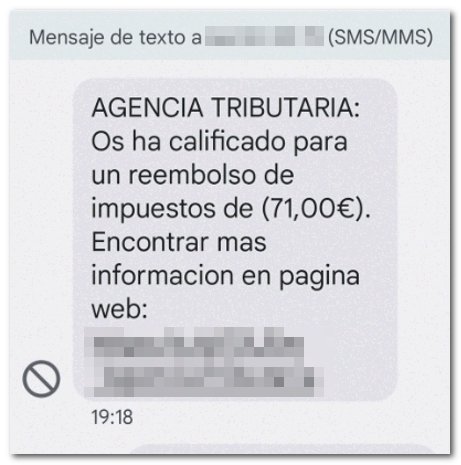
The core of this fraudulent scheme is its dissemination via SMS. Scammers send text messages claiming the recipient has an “official notification” from the Spanish Tax Agency to review or is eligible for a “tax refund.” The message includes a web link, enticing the user to click and proceed.
How to Spot the Scam: Domain and Wording Are Key
Incibe advises the public to watch for the following red flags to identify this type of scam:
- Check the URL’s domain: Official Spanish government websites typically end in
.gob.es or .es. The malicious links in this campaign, however, often use low-cost, unofficial extensions like .top or .click.
- Examine the message content: Legitimate official notifications usually include personalized information such as the recipient’s name, surname, and part of their National Identity Number (DNI). In contrast, scam messages are typically generic, mass-sent texts, and their wording may seem awkward or contain spelling mistakes and improper spacing.
The Phishing Website: A High-Fidelity Fake to Steal Sensitive Information
Once a user clicks the link in the scam text, their device is redirected to a meticulously crafted fake webpage. This site is designed to look nearly identical to the official Tax Agency website and asks the user to enter private information, including their DNI and bank account details, under the pretext of “processing your tax refund.”
Official Security Guidance: The Tax Agency’s Proper Communication Channels
The National Cybersecurity Institute and the Tax Agency have issued a joint, stern warning:
- The Spanish Tax Agency (AEAT) will never ask for confidential financial information, such as bank card numbers or passwords, via SMS or email.
- The Tax Agency will never send links via text or email for directly claiming a tax refund.
- All legitimate tax procedures, such as checking notifications or processing a refund, must and can only be done through the Spanish Tax Agency’s official electronic headquarters (Sede Electrónica Oficial) or by filing the official personal income tax return (Declaración de la Renta). If you receive a suspicious message, you should ignore and delete it immediately. Do not click on any links.
