Market Imbalance: Soaring Rents Amid Shrinking Supply
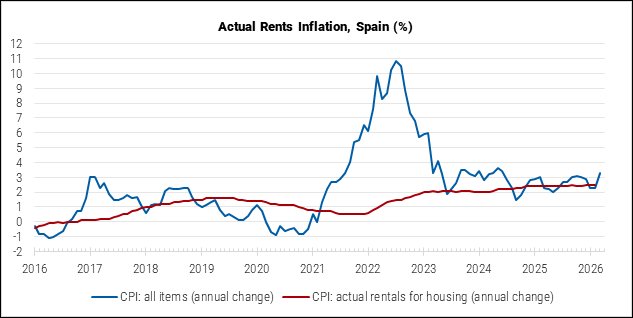
According to the latest report from Spanish property portal Idealista, the country’s rental market is experiencing a significant situation where demand outstrips supply. Data shows that over the past three years, the national average rent has increased by 30.7%. Specifically, the average monthly rent for an 80-square-meter apartment has climbed to around €1,200. In stark contrast to the soaring rents, the supply of rental properties on the market has decreased by approximately 30% during the same period, further intensifying market tensions.
Policy Impact: New Housing Law Fails to Meet Expectations
The new Housing Law introduced by the Spanish government in 2023 was intended to stabilize rents, increase market supply, and protect tenants’ rights. However, the market’s response since its implementation has been contrary to these policy goals. In key regions, rent increases have far surpassed the national average. For instance, rents in the Community of Madrid surged by a staggering 41.3% during the same period, while the Valencian Community recorded a 40.2% rise. The impact has been particularly severe in Barcelona, where the supply of long-term rental properties has plummeted by 69%, making it one of the most affected cities in the country.
Fierce Competition: Tenant Screening Becomes Significantly Tougher
The scarcity of properties has directly led to fierce competition in the rental market. Currently, for every rental advertisement posted in Spain, there are an average of 41 applications, a number that has skyrocketed by 119% compared to 2023. This immense competitive pressure gives landlords greater bargaining power and choice. A trend of “upgraded screening” is widely observed, with landlords preferring to rent to tenants with high incomes and stable jobs. This phenomenon is further marginalizing young people, low-to-middle-income families, and those with unstable employment, who now face unprecedented difficulties in finding a place to rent.
Structural Shift: Long-Term Rentals Transition to Short-Term
Faced with strict rental regulations and an uncertain market environment, some landlords are adjusting their rental strategies. The report indicates that about 29% of landlords are considering or have already converted their long-term rental properties into seasonal or temporary rentals. This shift aims to avoid the risks associated with long-term contracts or to seek higher investment returns. However, this trend is further squeezing the already tight supply of long-term housing, pushing the rental market towards short-term instability and fundamentally making it harder for ordinary residents to secure stable accommodation.
