Agreement Reached, Return Procedures Face Major Overhaul
According to European media reports, the European Parliament, the European Commission, and the Council of the EU reached a provisional political agreement on Monday on the text of a new regulation concerning migrant returns. This agreement aims to streamline expulsion procedures and increase the efficiency of returns, marking the latest move by the EU to tighten its migration policy.
Nicholas A. Ioannides, Cyprus’s Deputy Minister of Migration, stated after the agreement that the new regulation will speed up the return process and strengthen the enforcement of returns for individuals not entitled to stay legally in the EU.
Core Elements: Third-Country Return Centers and Mandatory Cooperation
The new rules introduce two key innovations:
First, the agreement allows EU member states to establish ‘return centers’ in third countries, which are not the migrants’ countries of origin, to house migrants awaiting deportation. This is contingent on the EU having signed a relevant agreement with the third country and strictly adhering to the principle of ‘non-refoulement’.
Second, the regulation explicitly requires the migrants concerned to ‘actively cooperate’ in the return procedure. If an individual fails to cooperate, they will face a series of severe sanctions, ranging from the cancellation of social benefits and revocation of work permits to potential criminal penalties, including imprisonment. This clause is intended to address the long-standing problem of return procedures stalling due to a lack of cooperation from migrants.
Enhanced Detention and Priority Expulsion Mechanisms
To prevent migrants from absconding during the return process, the new regulation authorizes member states to detain them if there is an assessed risk of absconding or other security concerns. The regulation emphasizes that fundamental human rights must be respected within the return centers and that unaccompanied minors cannot be detained.
Furthermore, for individuals deemed a threat to public or national security, the bill establishes a ‘priority expulsion’ mechanism. Such individuals can be held in prison facilities (though separated from regular prisoners) and may face an indefinite EU entry ban.
Strong Political Disagreement and Public Reaction
This legislation has sparked significant controversy both within and outside the EU. During the initial discussions among the 27 EU interior ministers, Spain was the only country to express explicit opposition. The Social Democrats, the Greens, and the Left also voiced strong opposition, arguing that the bill is a concession to far-right ideologies and sacrifices fundamental human rights.
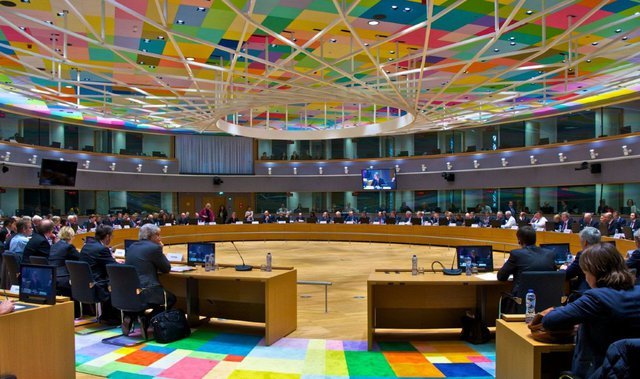
Mélissa Camara, a Green Party MEP, criticized the agreement as ‘a shameful deal,’ believing it writes xenophobic ideas into law. Silvia Carta, Advocacy Officer at the international organization PICUM, warned that this would create a ‘harsh system of detention and deportation’ that could lead to family separation and send people to countries completely foreign to them.
Next Legislative Steps
Following this provisional political agreement, its legal text will undergo a standard judicial and linguistic review. Subsequently, the text must be submitted for a formal vote at a plenary session of the European Parliament and finally approved by the Council, composed of the interior ministers of the EU member states, before it can officially become law and take effect.
