A New Market Favorite Fueled by High Housing Prices
Spain is currently facing a severe housing crisis. In the capital, Madrid, for example, a standard apartment can easily cost between three to four hundred thousand euros, and the rental market remains under constant pressure. Against this backdrop, a low-cost prefabricated home sold on Amazon has quickly gained popularity, capturing the attention of hundreds of thousands as a potential alternative to the traditional real estate market.
Product Breakdown: Expandable Container-Style Homes
The product sparking widespread discussion is a move-in ready prefab home priced at just €6,887. Its key feature is an innovative foldable and expandable design. The house is shipped as a standard sea container and, upon arrival, its galvanized steel frame can be unfolded to create a living space with a spacious living room, kitchen, bathroom, and up to four separate bedrooms. The walls are made of insulated and soundproof sandwich panels to ensure living comfort.
Other similar products are also available on Amazon. For instance, another popular model for families is priced at €8,200 and includes four bedrooms and two fully functional bathrooms. Some products even feature a “micro-home expandable” design, allowing for the addition of a second story to double the space. However, it’s important to note that the individual rooms in these homes are typically compact.
Legal and Cost Considerations: The Hidden Expenses
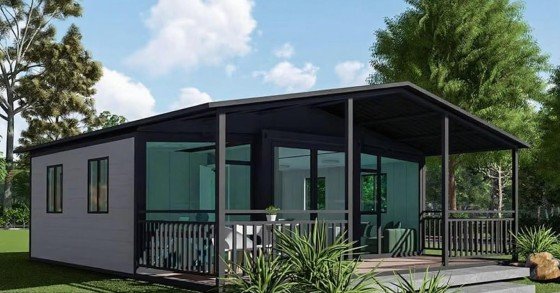
Although the initial price of these prefab homes is highly attractive, the total final cost is much higher. Under Spanish law, such structures are classified as real estate (bienes inmuebles) and must adhere to a strict set of legal and technical regulations. This means buyers must hire an architect to draft a project plan, apply for a building permit (licencia de obra) from the local council, and ensure the structure fully complies with the Technical Building Code (Código Técnico de la Edificación, CTE).
These procedures not only incur additional professional and administrative fees but also extend the overall project timeline. Furthermore, what Amazon sells is only the main structure of the house. Buyers are responsible for preparing a flat, compliant land foundation, and the associated engineering costs are extra.
Sales Model and Consumer Protection
Consumers should be aware that these prefab homes are not sold or shipped directly by Amazon. Instead, they are sold by third-party sellers, such as “YiiHuii,” through the Amazon marketplace. In these transactions, Amazon acts as a platform and offers its “A-to-Z Guarantee” for eligible purchases. According to platform policy, if a buyer encounters a problem with their purchase, they should first contact the seller to find a solution.
