Worsening Housing Situation: The Imbalance of Price and Supply
In its Fundamental Rights Report 2024, the European Union Agency for Fundamental Rights (FRA) details the widespread housing difficulties faced by EU member states. According to the report’s data, between 2015 and 2024, housing prices across the EU rose by an average of 53.4%, while rents increased by 16.8% over the same period.
The continuous rise in prices stands in stark contrast to the chronic shortage of social and affordable housing. This imbalance has dramatically increased financial pressure on countless households, with many facing the risk of forced eviction or homelessness. The FRA emphasizes that the right to adequate housing is a cornerstone for safeguarding personal dignity and fundamental rights.
The Issue of Homelessness: The Plight of 1.3 Million and Governance Challenges
The report estimates that approximately 1.3 million people are currently homeless within the EU, including nearly 400,000 children. The living conditions of this population are extremely precarious, often confined to streets, temporary shelters, or other informal dwellings.
The FRA also points out that a major obstacle to addressing this issue is the lack of a uniform definition and statistical standard for “homelessness” among member states. This definitional disparity not only complicates cross-national comparisons and data aggregation but also hinders the effective allocation of resources and the implementation of targeted governance strategies.
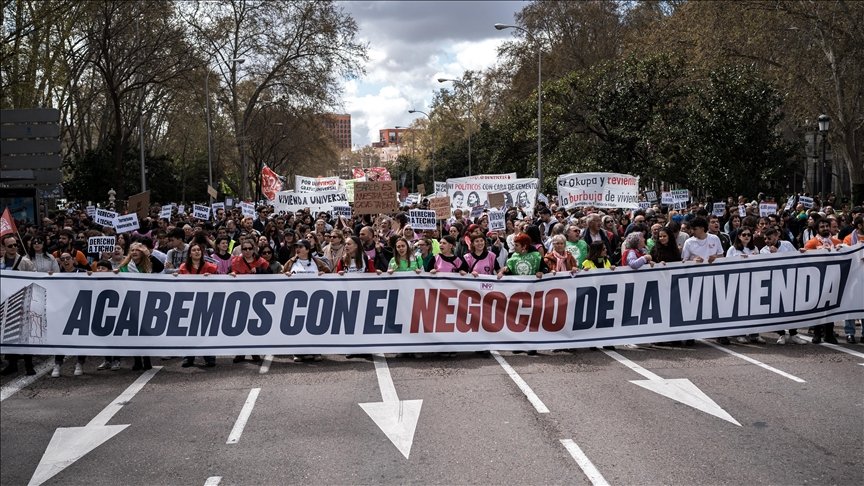
Divergent Member State Policies: From Protection to Punishment
The report assesses the housing policies of different member states, revealing significant variations. Some countries have elevated the right to housing to a legal high ground; for example, Belgium and Portugal have enshrined it in their constitutions. Spain’s recent measures have also received positive evaluation from the FRA. The country has strengthened legal protections for vulnerable tenants, allowing for the suspension of eviction procedures under certain conditions and mandating that relevant authorities provide alternative housing solutions for those affected.
However, the report also criticizes the punitive measures adopted by a few countries. In Hungary, for instance, a legal amendment made it an offense to reside in public spaces long-term. The FRA argues that such policies are a regressive step that directly infringes upon the basic right to existence for the homeless population.
Seeking Solutions: The “Housing First” Model and EU-Wide Action
Regarding solutions, the report strongly advocates for the “Housing First” model. Its core principle is to first provide a long-term, stable home for homeless individuals, and then offer complementary support services such as employment, healthcare, and social integration. Countries like Austria, Belgium, Denmark, Ireland, and Sweden have adopted this model with positive results.
Meanwhile, the European Commission has prioritized tackling the housing crisis. According to EU estimates, approximately 650,000 new housing units are needed annually to meet market demand and alleviate pressure. To this end, the EU is actively promoting the “European Affordable Housing Initiative,” which aims to systematically address this rights-eroding crisis by guiding investment, expanding housing construction, and encouraging the development of social housing.
