ECB’s Rate Hike Decision and Its Impact on Spain
The European Central Bank (ECB) announced this Thursday a 0.25 percentage point increase in its main refinancing rate, bringing it to 2.25%. This decision puts direct pressure on Spain’s credit market, particularly on household loans. According to Bank of Spain statistics from early May 2026, Spanish households hold over €640 billion in loans, including €523 billion in housing loans and €118 billion in consumer loans. Although the proportion of fixed-rate loans has increased in recent years, a significant volume of existing loans will be affected by this rate adjustment.
Mounting Pressure on Variable-Rate Mortgage Holders
This rate hike has the most direct impact on borrowers with variable-rate loans. In its latest report on the Spanish economy, BBVA Research noted that nearly 60% of the existing mortgage balance is still linked to variable rates. Looking at new contracts, variable-rate loans account for 43%, hybrid rates for 15%, and fixed-rate loans for 42%.
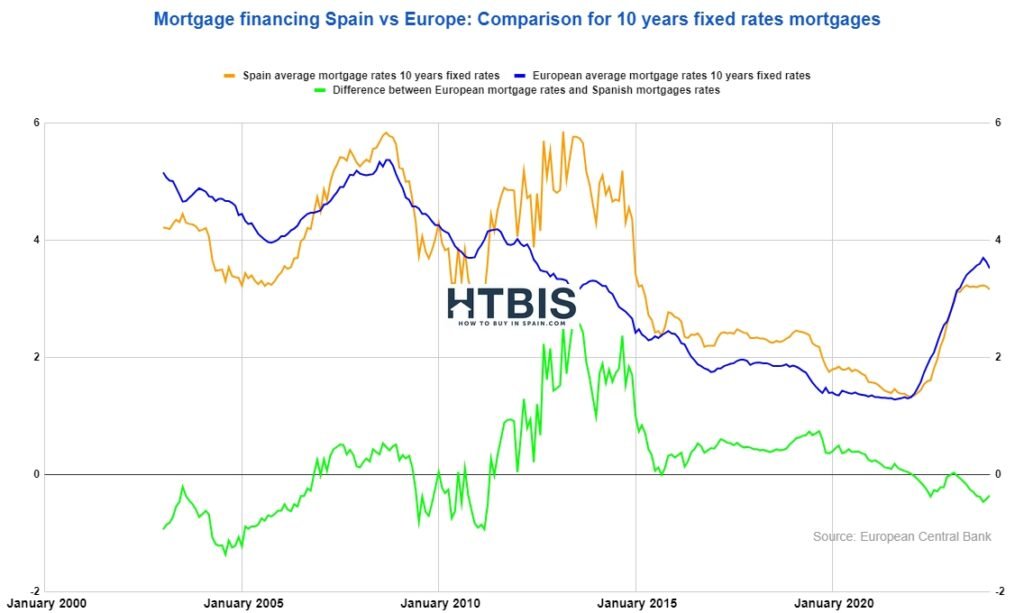
As the benchmark for most variable-rate mortgages in Spain, the Euro Interbank Offered Rate (Euribor) has already reacted to rate hike expectations with a steady climb. Its daily rate currently exceeds 2.84%. Looking back at May, the monthly average for Euribor closed above 2.8%, marking a 20-month high. For households whose mortgages were reviewed in May, this has already led to an average annual payment increase of about €700.
Future Rate Outlook Amid Geopolitical Tensions
ECB President Christine Lagarde, when explaining the current policy, did not explicitly rule out further rate hikes within the year, highlighting the impact of the ‘longer-than-expected duration of the war in Iran’ on the economic outlook. Market analysts believe that if the ECB continues to tighten its monetary policy this year, Euribor could climb further towards the 3% mark, a level not seen since August 2024. This would further increase the monthly repayment burden for millions of Spanish households.
Market Divided: Financial Institutions’ Forecasts on Rate Hikes
Regarding the ECB’s future policy path, opinions among major financial institutions are divided. Some analysts believe further tightening is necessary to combat inflation.
Martin Wolburg, a senior economist at Generali Investments, predicts that the market expects another 43 basis points in cumulative hikes this year, with the next one potentially in September if energy prices do not fall. Deutsche Bank also believes the ECB might make its final rate hike in September, given the weak economic growth in the Eurozone. Swiss-based Vontobel similarly points out that if tensions in the Strait of Hormuz persist, a September hike is highly likely, but they expect it to be the last one.
However, other institutions hold a more cautious view. Analysts at Aberdeen are inclined to see this week’s hike as a one-off adjustment, with no further increases this year unless energy prices spiral out of control due to the war in Iran. Pimco also stated that it does not expect the ECB to embark on an aggressive rate-hiking cycle, arguing that the current economic environment differs from 2022. The negative supply shock is not accompanied by a strong demand shock, reducing the urgency for sustained rate hikes.
