EU Launches Historic Migration Reform
After nearly a decade of development and negotiations, the European Union officially approved and launched the New Pact on Migration and Asylum in 2024. This pact is considered one of the most significant reforms to the EU’s migration system in its history, designed to unify and standardize the long-standing disparate migration and asylum policies of its 27 member states.
The reform comes against the backdrop of immense pressure the EU has faced in managing irregular migration since the 2015 refugee crisis. The EU states that the new regulations aim to establish a more efficient, unified, and predictable management system to restore order at the borders and enhance the security of external frontiers.
Core of the New Policy: Efficiency, Control, and Returns
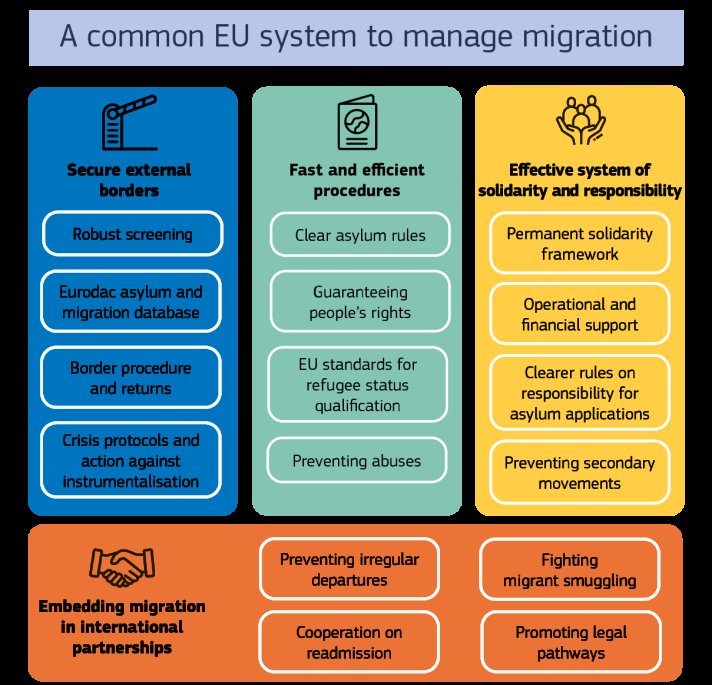
The core changes of the New Pact on Migration and Asylum are mainly reflected in three areas:
- Stricter Border Screening: The new rules mandate compulsory screening procedures at the EU’s external borders for all irregular arrivals, including identity, health, and security checks.
- Accelerated Asylum Procedures: For applicants from countries deemed to have low asylum approval rates, a fast-track border procedure will be initiated, aiming to complete the assessment and return decision within weeks.
- Mandatory Solidarity Mechanism: Member states must choose between relocating asylum seekers, providing financial contributions, or deploying personnel to share the burden of frontline countries. The new pact also strengthens the return mechanism to improve the efficiency of deportations.
Additionally, the pact includes the concept of cooperating with non-EU countries to process asylum claims or carry out returns offshore, a component that has drawn significant attention due to human rights controversies.
The Vatican’s Humanitarian Voice
As the EU vigorously pushes forward with its policy reforms, the voice from the Vatican provides a stark contrast. Pope Francis has repeatedly reiterated his long-standing position, emphasizing that human dignity must be placed first when addressing migration. His iconic call—‘migrants are not numbers, but people’—serves as a reminder to policymakers that behind every asylum seeker lies an individual story and a life.
This stance is not new but reflects the Vatican’s consistent attitude. Previous popes, including Pope Benedict XVI, have pointed out that while nations have the right to manage their borders, this power must be exercised with respect for fundamental human rights and human dignity. The Vatican advocates that welcoming, protecting, promoting, and integrating migrants is a responsibility of a civilized society.
A Clash of Two Logics: Europe at a Crossroads
Currently, two distinctly different logics are at play in Europe regarding migration:
- The Governance Logic of EU Institutions: Focuses on law, order, efficiency, and security, seeking to control the situation through strict procedures and uniform rules. Its keywords are ‘management’ and ‘control’.
- The Humanitarian Logic of the Vatican and Human Rights Organizations: Focuses on ethics, dignity, compassion, and reception, calling for the well-being of each individual to be the starting point of policy. Its keywords are ‘humanity’ and ‘dignity’.
As the New Pact on Migration and Asylum transitions from a legal document to on-the-ground implementation, the clash between these two logics will intensify. Critics worry that an overemphasis on efficiency and returns could erode the right to asylum and ‘outsource’ humanitarian responsibilities to countries outside the EU. Although the new pact is now in place, the debate over its fairness, effectiveness, and humanitarian impact is just entering a new phase.
